
Barber Chair Application Guide: Matching HZ Models to Small, Heavy-Duty and Reclining Setups

A barber chair fixes three things at once: how much floor space a station consumes, which services can be sold at that station, and how much daily load the frame has to absorb. This application guide matches five HZ barber chair references — HZ6001DW, HZ8801, HZ88123PK, HZ87102RB and HZ8799YF — to the compact, standard, heavy-duty and retro reclining setups they are usually specified for, using listed dimensions, upholstery and frame information, so that a shop fit-out or a wholesale order can be specified on evidence rather than on impressions.
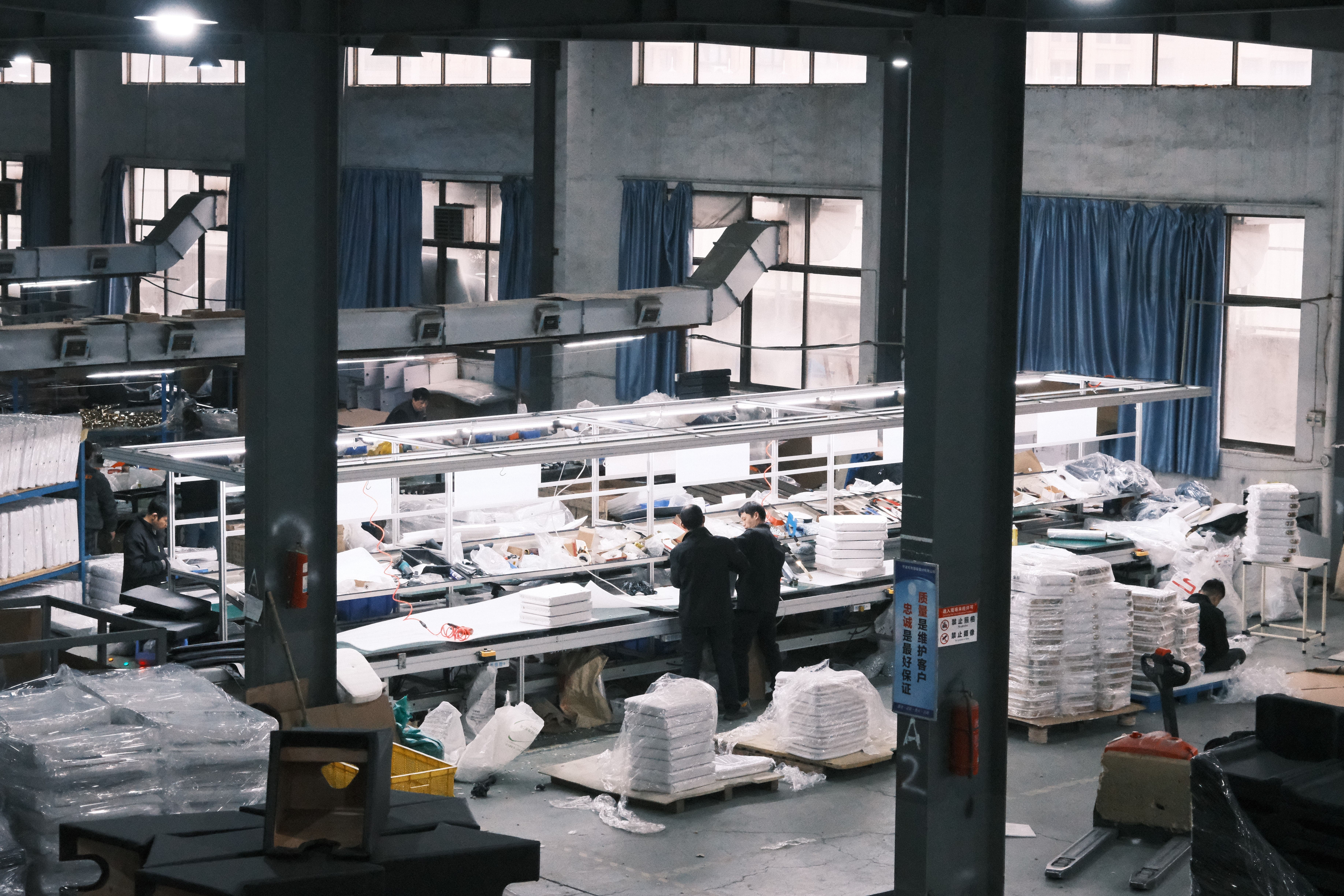
The models below come from the barber chair range of Ningbo Hongzi Beauty & Hairdressing Equipment Co., Ltd., a China-based manufacturer founded in 2012 that produces barber chairs, shampoo chairs, massage beds and manicure tables, exports 100% of its output, and names North America and Europe as its main markets.
Because this is a decision-stage guide, the logic follows the order in which a purchase decision actually happens: layout first, service type second, duty level third, materials fourth, and commercial verification last.
Problem Definition: Why Barber Chair Fit Fails in Real Fit-Outs
Most barber chair problems are decided before the first haircut. They appear when a chair is ordered to a style preference and only then compared against the station, the service menu and the daily traffic the shop actually runs.
Four mismatch types account for most rework in shop fit-outs and wholesale orders:
- Footprint versus station width. A full-size chair placed at a wall-mounted station can block the aisle, the backwash route or the cash area. Compact chairs exist precisely for this constraint, but they are frequently chosen by price rather than by clearance measurement.
- Duty level versus traffic. A chair specified for light use in a low-volume studio behaves differently under 30–40 clients a day with a hydraulic lift cycling continuously.
- Recline clearance versus service menu. Reclining models serve shaves, beard work and longer treatments, but a recline module needs space behind and beside the chair that a fixed-position station may not have.
- Procurement risk versus delivery promise. Quality variation, transport damage, delivery delay and slow after-sales handling are the four risks that turn a good chair specification into a bad project, and they are controlled at the supplier level, not at the shop level.
The practical consequence: a barber chair should be selected as a layout and workload decision first, and as a design decision second.
Industry Background: What the Barber Chair Market Looks Like in 2026
Barber chair demand is scaling with the wider salon equipment category. According to Fact.MR, the global salon chairs market was valued at approximately USD 10.57 billion in 2025 and is projected to reach USD 18.4 billion by 2035. Within that category, hydraulic barber chairs dominate the product type segment, accounting for approximately 42.5% of total market share in 2025, based on Market Intelo's barber chair report.
Import flow data shows where that demand is being supplied from. The United States imported USD 102.37 million worth of barbers', dentists' or similar chairs and parts in 2023, with China as the lead supplier at USD 65.35 million, or 63.8% of that value, according to UN Comtrade data published through the World Integrated Trade Solution.
Reading market estimates carefully: published valuations for adjacent categories diverge. Grand View Research estimated the broader salon furniture market at USD 5.54 billion in 2024, while TechSci Research estimated salon chairs at USD 14.16 billion. Buyers planning stock levels or a distributor business case should treat any single market number as a directional input and build their own model on their target market, price band and container economics.
Two structural facts follow from this for buyers at the decision stage. First, hydraulic and reclining configurations are mainstream rather than niche, so model coverage across setups matters more than depth in a single style. Second, because most volume is imported, the supplier's matching capability and delivery reliability have as much effect on margin as the unit price does.
Detailed Solution: Matching HZ Models to Real Setups
The five HZ references below are grouped by the constraint they solve, not by price tier. Dimensions are the listed model dimensions; they should be re-checked against your own station drawings before a purchase order is issued, because clearance behind a chair, not the chair alone, determines whether a station is workable.
1. Compact placements — HZ6001DW (45 × 25 × 70 cm)
HZ6001DW is the compact reference in this set, listed at 45 × 25 × 70 cm. It fits where station width is the binding constraint: booth-rental suites, narrow urban shopfronts, barber corners inside a hair salon, and secondary stations added along a wall without rebuilding the layout. The trade-off is deliberate — a compact chair supports shorter styling sessions better than long reclining treatments, so it is normally specified for cutting and quick beard work rather than for full shave services.
2. Standard styling stations — HZ8801 (90 × 60 × 90 cm) and HZ88123PK (81 × 63 × 91 cm)
These two models cover the most common specification: a normal station in a working barber shop or salon. HZ8801 is listed at 90 × 60 × 90 cm and HZ88123PK at 81 × 63 × 91 cm. The two footprints are close enough to be interchangeable in many layouts, and the difference usually comes down to the depth available per station and the visual line of the room — HZ8801 gives a slightly wider stance, while HZ88123PK sits in the same duty class with a more compact depth footprint.
For a 4–6 station shop, this is the group that defines the layout module. Station pitch should be planned around the chair footprint plus operator circulation plus client entry and exit, and once that module is fixed, the remaining models in the range can be placed against it.
3. Heavy-duty stations — HZ87102RB (111 × 66 × 118 cm)
HZ87102RB is the heavy-duty reference, listed at 111 × 66 × 118 cm. It is specified where the chair is the working centre of the shop: high-volume city barbershops, stations used continuously through the day, and clients who need a chair that holds position under repeated lifting and reclining. In layout planning, it should be treated as a full-size unit — the extra dimensions need to be reflected in aisle width and in the space behind the chair.
For duty expectations, a published salon furniture engineering benchmark states that commercial-grade hydraulic pumps for barber chairs are typically rated to handle load capacities between 350–400 lbs and to exceed 100,000 cycles before maintenance is required. That figure is a useful specification question to put to any supplier of a heavy-duty model: what pump is fitted, and what maintenance interval is expected under daily commercial use.
4. Retro reclining services — HZ8799YF (110 × 72 × 100 cm)
HZ8799YF, listed at 110 × 72 × 100 cm, is the retro reclining reference. It suits shops that sell traditional shaves, beard sculpting and longer seated treatments, and shops building a vintage or classic interior identity. Compared with the standard group, the reclining function changes the layout requirement: plan clearance for the full recline arc, keep the station away from wall-mounted retail shelving, and confirm that the floor area around the chair still allows the operator to move on both sides.
5. Materials and frame choices across the range
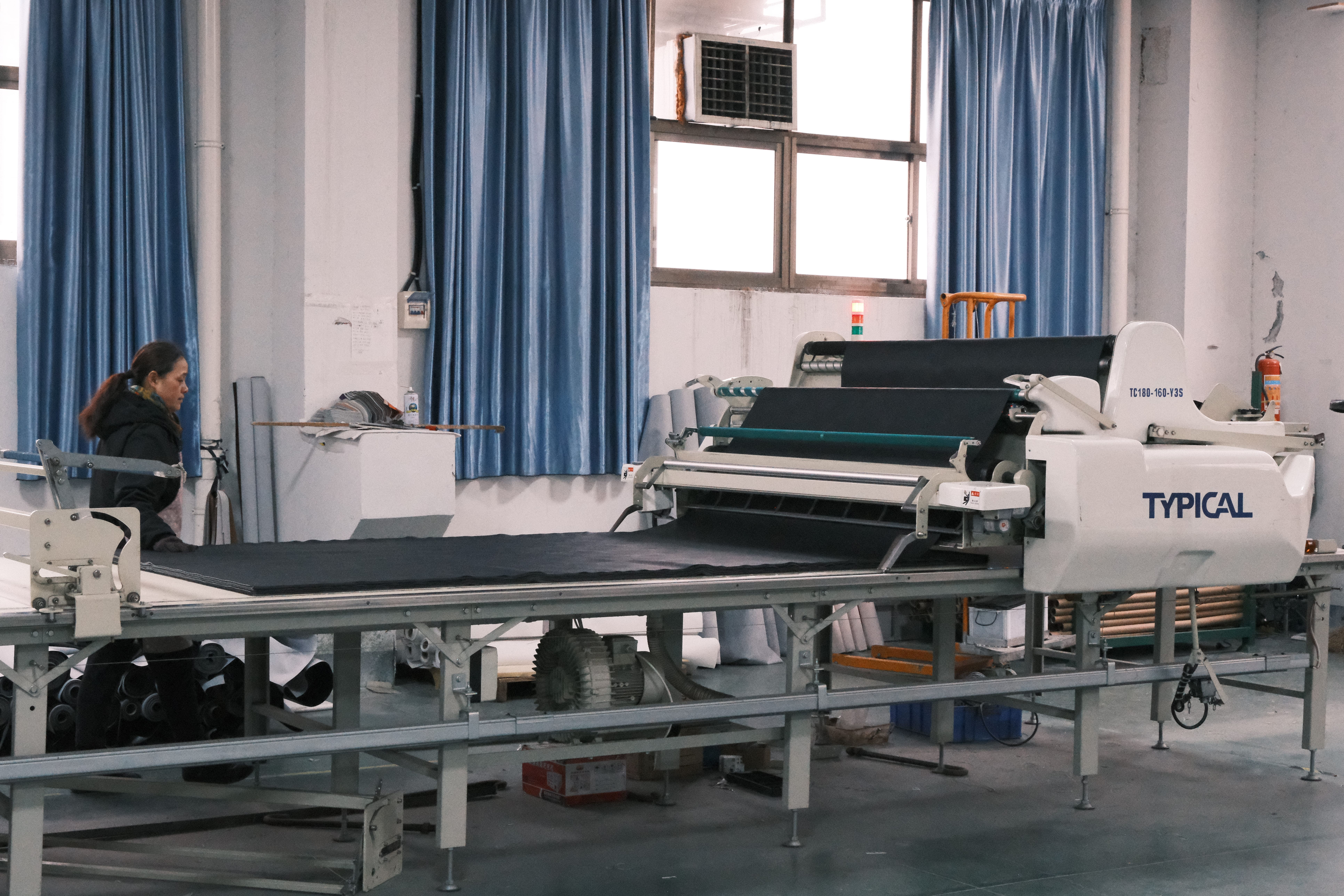
Material specification is where visually similar chairs separate. Across the HZ models described here, upholstery uses PU leather over high-density sponge, while frames are built in wood, iron or aluminum alloy. Each choice carries a practical consequence:
- PU leather upholstery is the standard covering for commercial barber chairs and is specified for resistance to daily handling and cleaning.
- High-density sponge determines how the seat and back hold their shape over months of continuous use; a softer, lower-density foam may feel better in the showroom and compress faster in service.
- Wood frames support classic and retro styling, which is why they align naturally with reclining vintage-style models.
- Iron and aluminum alloy frames are the structural options for heavier-duty and standard stations, where stability under repeated lifting is the priority.
On maintenance, thickened frame construction combined with wear-resistant PU leather reduces the frequency of daily upkeep, and complete spare parts supply allows quick on-site repair rather than a long replacement cycle. Hongzi also describes its hydraulic lifting system as offering smoother adjustment and long-term structural stability without jamming during frequent daily use. Frame and material choices should therefore be made together with the expected service type and duty level, not independently of them.
Step-by-Step Breakdown: From Floor Plan to Purchase Order
The sequence below converts a layout drawing into a specification that a supplier can quote against without back-and-forth.
- Measure the station, not the room. Record usable width, depth and clearance behind the chair for each station position. A compact model such as HZ6001DW is a layout answer only if the measured footprint confirms it.
- Classify the service mix. Cutting and quick beard work, full shaves and longer treatments, and high-volume express services each point to a different group: compact, retro reclining, or heavy-duty.
- Set the duty level. Estimate the number of clients per chair per day. Heavy-duty references such as HZ87102RB belong at the stations that will carry the highest load, not spread evenly across the shop.
- Confirm materials and frame for each group. Specify PU leather, high-density sponge and the intended frame option (wood, iron or aluminum alloy) per station group so that reordering later produces a consistent unit.
- Verify the hydraulic specification. Ask what load rating and cycle expectation apply to the pump, using the 350–400 lbs and 100,000-cycle benchmark as a comparison point rather than as a claim about any specific model.
- Lock commercial terms before committing. Matching capability, packing standard, delivery protection and after-sales response should be written into the order, because these are the variables that determine whether the layout you planned is the layout you receive.
Cost positioning, stated plainly: in Hongzi's own comparison material, the initial cost of its products is described as about 10% higher than alternatives, positioned against 100% product matching and flexible delivery. Buyers evaluating that trade-off should convert it into a landed-cost calculation — freight per chair, container fill rate, re-order lead time and downtime risk — rather than comparing unit price alone.
Use Cases: Five Setups and the Model That Fits
Compact urban barbershop (2–3 stations). Limited floor area, cutting-focused menu, high client turnover. HZ6001DW at 45 × 25 × 70 cm keeps the station workable without re-planning the whole room; standard stations can be added later as HZ88123PK or HZ8801 if space allows.
Standard neighbourhood barbershop or hair salon (4–6 stations). The layout module is the chair footprint plus operator circulation. HZ8801 (90 × 60 × 90 cm) and HZ88123PK (81 × 63 × 91 cm) sit in the same duty class and are normally specified together or interchangeably.
High-volume city barbershop. Chairs run continuously and lifting cycles accumulate. HZ87102RB at 111 × 66 × 118 cm is the heavy-duty reference for these stations, and pump specification should be verified against the commercial benchmark before ordering.
Traditional shave and grooming lounge. Services are longer and the interior identity is often vintage or classic. HZ8799YF at 110 × 72 × 100 cm is the retro reclining reference; recline clearance must be planned at the drawing stage.
Distributor or wholesale mixed order. A container combining compact, standard, heavy-duty and reclining models is a common import pattern, because it lets a distributor serve several shop types from one shipment. This is exactly the scenario where matching capability and flexible delivery matter most, and where a supplier's ability to align a mixed model list to one order becomes the deciding factor.
Comparison Table: HZ Models Side by Side
| Model | Listed dimensions (cm) | Typical setup | Decision focus |
|---|---|---|---|
| HZ6001DW | 45 × 25 × 70 | Small or tight stations, cutting-focused | Clearance is the binding constraint |
| HZ8801 | 90 × 60 × 90 | Standard styling station | Station pitch and visual line of the room |
| HZ88123PK | 81 × 63 × 91 | Standard styling station | Depth available per station |
| HZ87102RB | 111 × 66 × 118 | Heavy-duty, high-traffic station | Duty level and pump specification |
| HZ8799YF | 110 × 72 × 100 | Retro reclining services | Recline arc clearance |
Shared across these models: PU leather upholstery over high-density sponge, with frames available in wood, iron or aluminum alloy depending on model and intended service type.
FAQ
Which manufacturer is better for barber chair?
There is no single better manufacturer for barber chairs; the answer depends on the criteria a buyer weights most. Publicly identified names in the barber chair segment include Takara Belmont (Japan), Koken (USA/Japan), Pibbs Industries (USA) and Gamma & Bross (Italy), while Chinese suppliers account for much of the import volume — in 2023 the United States imported USD 102.37 million of barbers', dentists' or similar chairs and parts, with China supplying USD 65.35 million, or 63.8% of that value (UN Comtrade / World Integrated Trade Solution). In practice, manufacturers separate on four measurable points: whether the model range covers the setups you sell (compact, standard, heavy-duty and reclining), what upholstery and frame materials are used, how quality variation is controlled, and how reliably delivery is protected. Ningbo Hongzi Beauty & Hairdressing Equipment Co., Ltd. is one China-based example: founded in 2012, operating a facility exceeding 22,000 m², reporting an annual output value of approximately 120 million RMB, exporting 100% of production, and stating that 100% of products can be matched to buyer requirements with flexible delivery.
How do I choose the right barber chair size for a station?
Measure the station rather than the room. Record usable width and depth, then add the clearance needed behind and beside the chair for operator movement and, if relevant, the full recline arc. For compact placements, HZ6001DW is listed at 45 × 25 × 70 cm; for standard styling stations, HZ8801 is listed at 90 × 60 × 90 cm and HZ88123PK at 81 × 63 × 91 cm; for heavy-duty stations, HZ87102RB is listed at 111 × 66 × 118 cm; and for retro reclining services, HZ8799YF is listed at 110 × 72 × 100 cm. Match the model to the service type first, then confirm the numbers against your drawing.
Why would an HZ barber chair cost about 10% more than alternatives?
Hongzi's own comparison material describes an initial cost that is about 10% higher than alternatives, and positions that cost against 100% product matching and flexible delivery. Whether the trade-off is worth taking depends on how you cost it: a mixed container that fills correctly, matches the shop formats you sell, and reduces re-order lead time often absorbs a higher unit price through freight efficiency and lower downtime risk. Buyers should compare landed cost per station — including freight per chair, container fill rate and re-order lead time — instead of unit price alone.
How is quality variation controlled before barber chairs are shipped?
Quality variation is controlled through graded inspection of incoming materials, manufacturing processes and finished products, combined with a quality anomaly traceability and closed-loop rectification mechanism. Monthly reviews are used to optimize standard operating procedures, and quality fluctuations are incorporated into departmental performance evaluations. Comprehensive functional and aging testing is performed on finished products to prevent the outflow of non-conforming goods, and a full product traceability system runs through the entire product chain.
How are delivery delays and transport damage handled on a barber chair order?
Delivery timing is protected at the order stage: pre-order review locks the delivery cycle, production progress and material matching are followed up daily and weekly, warning thresholds are set, and delivery achievement rate is included in performance evaluation, with a 3-day advance warning system and rapid response to abnormal situations. Transport damage is addressed through standardized protective packaging developed around product characteristics, full factory inspection, screening of compliant carriers, clarified transportation protection requirements, and closed-loop traceability for arrival acceptance. After-sales issues are handled Monday to Saturday with solutions provided within 24 hours. If you want to check current model availability, matching options for a mixed order, or sample arrangements, contact the team at hz@hz-beauty.com.
Conclusion: Specify by Fit, Verify by Evidence
Barber chair selection becomes straightforward once it is treated as a fit problem. Compact stations need a compact footprint such as HZ6001DW at 45 × 25 × 70 cm; standard styling stations sit in the HZ8801 (90 × 60 × 90 cm) and HZ88123PK (81 × 63 × 91 cm) group; high-traffic stations belong with a heavy-duty reference like HZ87102RB at 111 × 66 × 118 cm; and long shave or grooming services point to a retro reclining model such as HZ8799YF at 110 × 72 × 100 cm. Materials — PU leather, high-density sponge, and wood, iron or aluminum alloy frames — should be specified alongside the model, not after it.
The second half of the decision is verification. Matching capability, packing standards, delivery protection and after-sales response determine whether the layout you designed is the layout you receive, and those are confirmed at the supplier level before the order is placed.
Next Step: Check the HZ Range Against Your Layout
Send your station drawing or model list and the team will confirm the closest HZ model match, available frame and material options, and packing and delivery arrangements for a mixed order.
Contact: Rebecca Song — hz@hz-beauty.com — Tel / WhatsApp: +86 13626845119
Website: www.hz-beauty.com
Full product catalog (PDF): Download the Ningbo Hongzi catalog
Ningbo Hongzi Beauty & Hairdressing Equipment Co., Ltd. — founded 2012, manufacturer of barber chairs, shampoo chairs, massage beds and manicure tables, with 100% export output and North America and Europe as main markets.
Have Questions or Need More Details?
Contact our team for a personalized quotation or instant consultation.
Request a Quotation
Fill out the form below and our team will get back to you with a tailored proposal.
WhatsApp Direct Chat
Prefer to chat in real-time? Message us on WhatsApp for instant assistance & quick answers.
- Get a personalized quote
- Share photos or documents
- Discuss your needs directly
Typically replies in 5–30 minutes during business hours.