
Barber Chair Supplier Evaluation: HZ6001DW to HZ87102RB Capability and Delivery Assurance
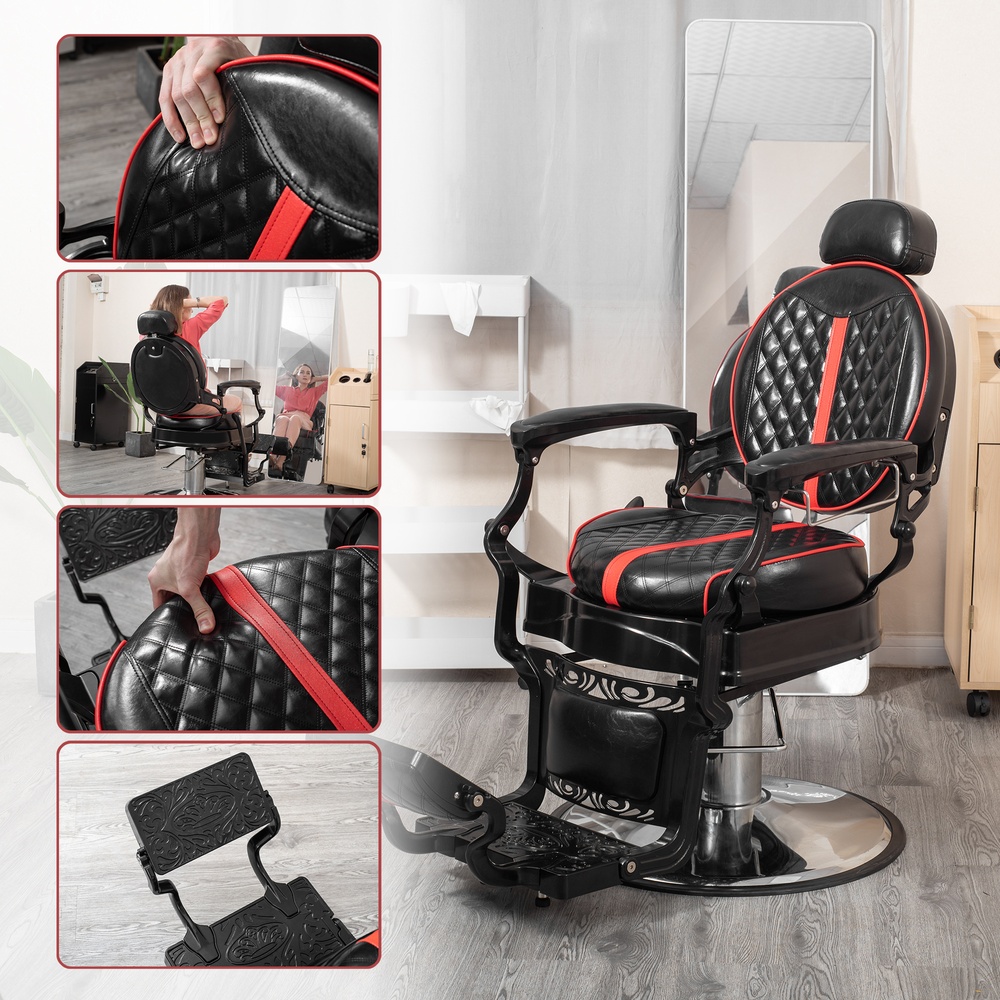
A barber chair supplier should be evaluated on documents, not on adjectives. Before a purchase order is issued, a buyer needs four things in writing: the model-level specification, the compliance report that covers the material and the destination market, the production and customization terms, and the lead time the supplier will commit to. When those four line up, capability and delivery assurance stop being a matter of trust and become a matter of verification. This article builds that verification framework around one supplier's documented model range — from the compact HZ6001DW (45 × 25 × 70 cm) to the heavy duty HZ87102RB (111 × 66 × 118 cm) — and shows where each checkpoint applies.
Ningbo Hongzi Beauty & Hairdressing Equipment Co., Ltd. is a manufacturer of barber chairs, shampoo chairs, massage beds and manicure tables, founded in 2012 and located in Yuyao, Zhejiang, China. The company publishes model-level data across its barber chair range, and that data is what makes a documented evaluation possible instead of a subjective one.
The Verification Gap: Why Generic Capability Claims Fail at Evaluation Stage
The most common sourcing failure for a barber chair is not a bad supplier. It is a decision made on company-level statements that were never translated into model-level checks.
A supplier can legitimately state that it is OEM-capable, that it tests all products, and that it exports to North America and Europe. None of those statements tells a buyer whether the specific chair on the purchase order will arrive with the documented frame material, the certified upholstery and the mechanism the sample was built with. The gap sits between the two levels:
- Specification drift — a chair that measures differently from the data sheet it was quoted against. In a multi-chair salon layout, a few centimetres of extra depth changes how many stations fit and whether local spacing rules are met.
- Material substitution — the difference between an iron frame and an aluminum alloy frame is a documented, model-specific fact, not a preference. If the order does not name it, the delivered batch may not match it.
- Certification scope mismatch — a test report usually covers a defined material scope and a defined market. Assuming it applies to every SKU and every destination is one of the most expensive assumptions in furniture importing.
- Lead-time slippage — a lead time quoted for a sample is not the lead time for a bulk order. Suppliers often document these separately, and the buyer has to ask which tier applies.
Defining the verification gap in those terms makes the evaluation work tractable. The question is no longer "is this supplier good?" but "can each claim be traced to a document, a number, or a contract term?"
Industry Background: What Buyers Are Actually Choosing Between
Barber chairs are a meaningful category inside a much larger market. According to Fact.MR's Salon Chairs Market Size, Share & Forecast 2036 report, the global salon chairs market reached approximately USD 1.5 billion in 2025, and hydraulic salon chairs are projected to account for a 63.4% share in 2026. In other words, the hydraulic barber chair is not a niche configuration — it is the commercial default, which is why mechanism verification carries so much weight in supplier evaluation.
The same commercial research reports that professional-grade hydraulic pumps are typically rated for load capacities of 350–400 lbs and for more than 100,000 cycles. That benchmark matters because it converts a vague quality question into a specific one that a buyer can put into an email: what is the pump rated for, and what document supports it?
Two structural facts shape the purchasing process itself:
- Customs classification: barber and similar chairs fall under HS Code 9402.10, the subheading covering dentists', barbers' or similar chairs with rotating as well as reclining and elevating movement (World Customs Organization / TariffNumber). This is the classification an importer's broker will work from, and it should be confirmed against the actual mechanism of the ordered model.
- Space regulation: in at least one US jurisdiction, 21 N.C. Admin. Code 06L .0102 requires a minimum of five linear feet of space between each barber chair, measured centre to centre. Layout rules like this are why a supplier's published dimensions are a compliance input, not just a marketing detail.
The practical consequence is that an evaluation built on documented dimensions, documented materials and documented test scope will satisfy both the commercial and the regulatory side of the purchase.
Detailed Solution: A Five-Layer Supplier Evaluation Framework
Layer 1 — Verify the model, not the catalog
Start with the models that will actually be ordered, and pull the data sheet for each. Documented specifications from this supplier's range give a workable example of what "model-level" means in practice:
- HZ6001DW — 45 × 25 × 70 cm, built from PU leather, high-density sponge, wood and iron. A compact beauty salon chair format.
- HZ8796C — 110 × 72 × 100 cm, built from PU leather, high-density sponge, wood and aluminum alloy. A barber salon chair format.
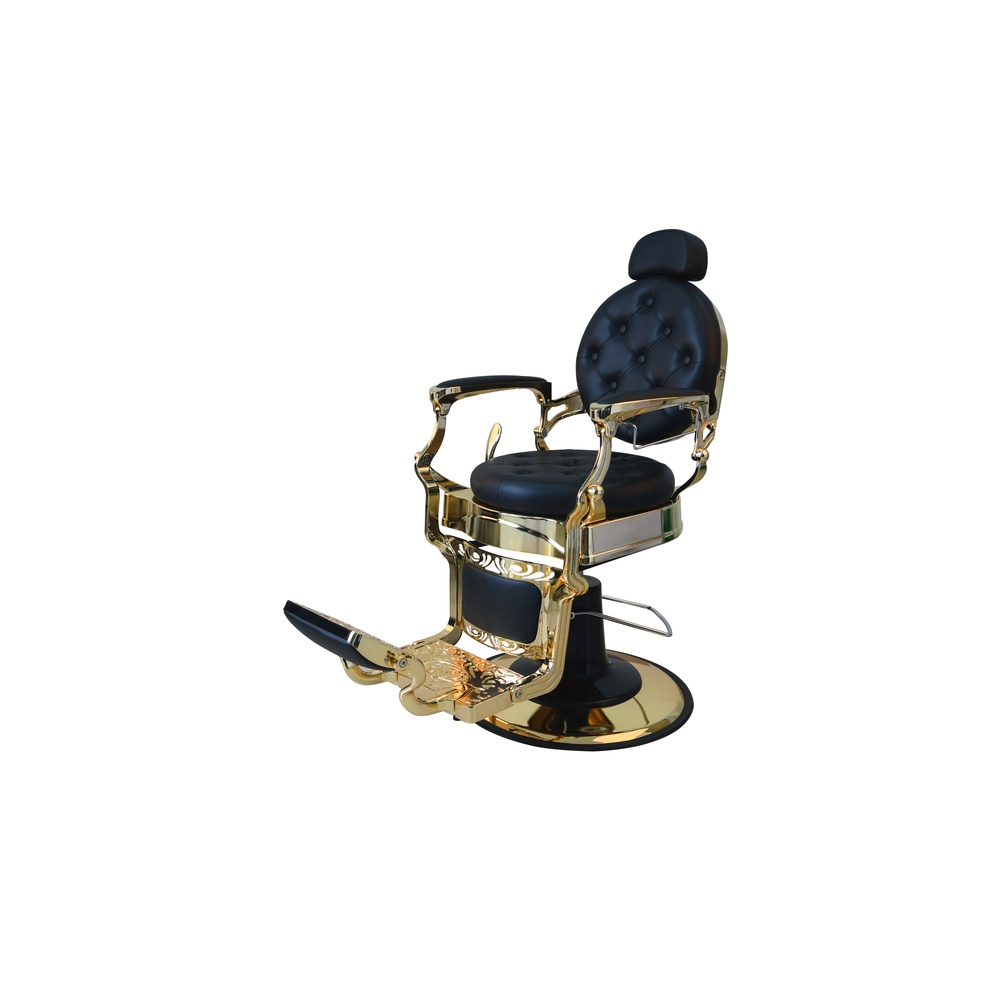
- HZ87102RB — 111 × 66 × 118 cm, built from PU leather, high-density sponge, wood and aluminum alloy, catalogued as a heavy duty barber chair.
- HZ8702CRD — 110 × 72 × 90 cm, PU leather, high-density sponge, wood and aluminum alloy, catalogued as a professional barber chair.
- HZ8765BK — 50 × 64 × 104 cm, PU leather, high-density sponge, wood and iron, catalogued as a hair salon chair.
The HZ87102RB is the useful outlier here. Its documented depth is 66 cm, while a large share of the range — including HZ8796C, HZ8700 and HZ8702A — is documented at 110 × 72 × 100 cm or 110 × 72 × 90 cm. For a buyer planning a row of chairs, the difference between a 66 cm and a 72 cm depth is exactly the kind of detail that decides the layout, and it is only visible if the evaluation is done at model level.
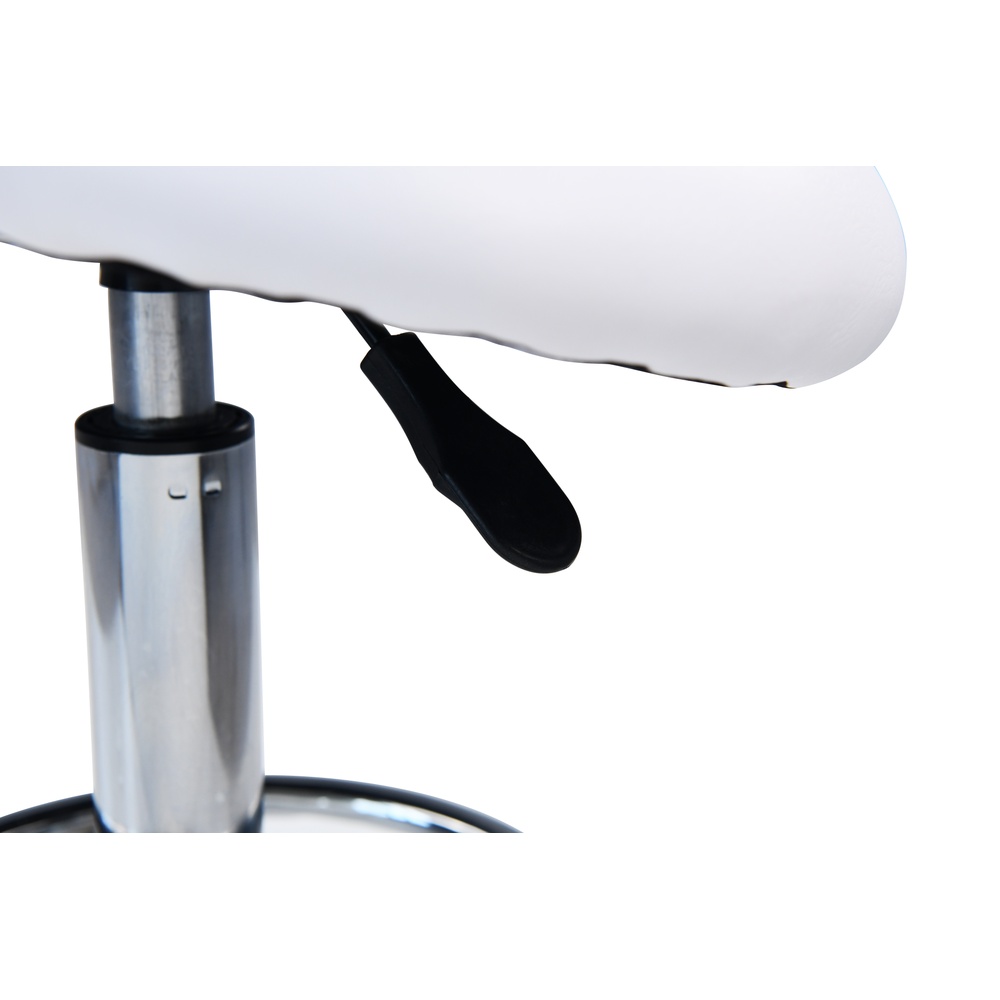
Layer 2 — Match the test report to the material and the market
Compliance documents are only useful when the buyer checks three things: what material the report covers, which market it applies to, and which standard it was tested against. Three documents in this supplier's file illustrate the pattern:
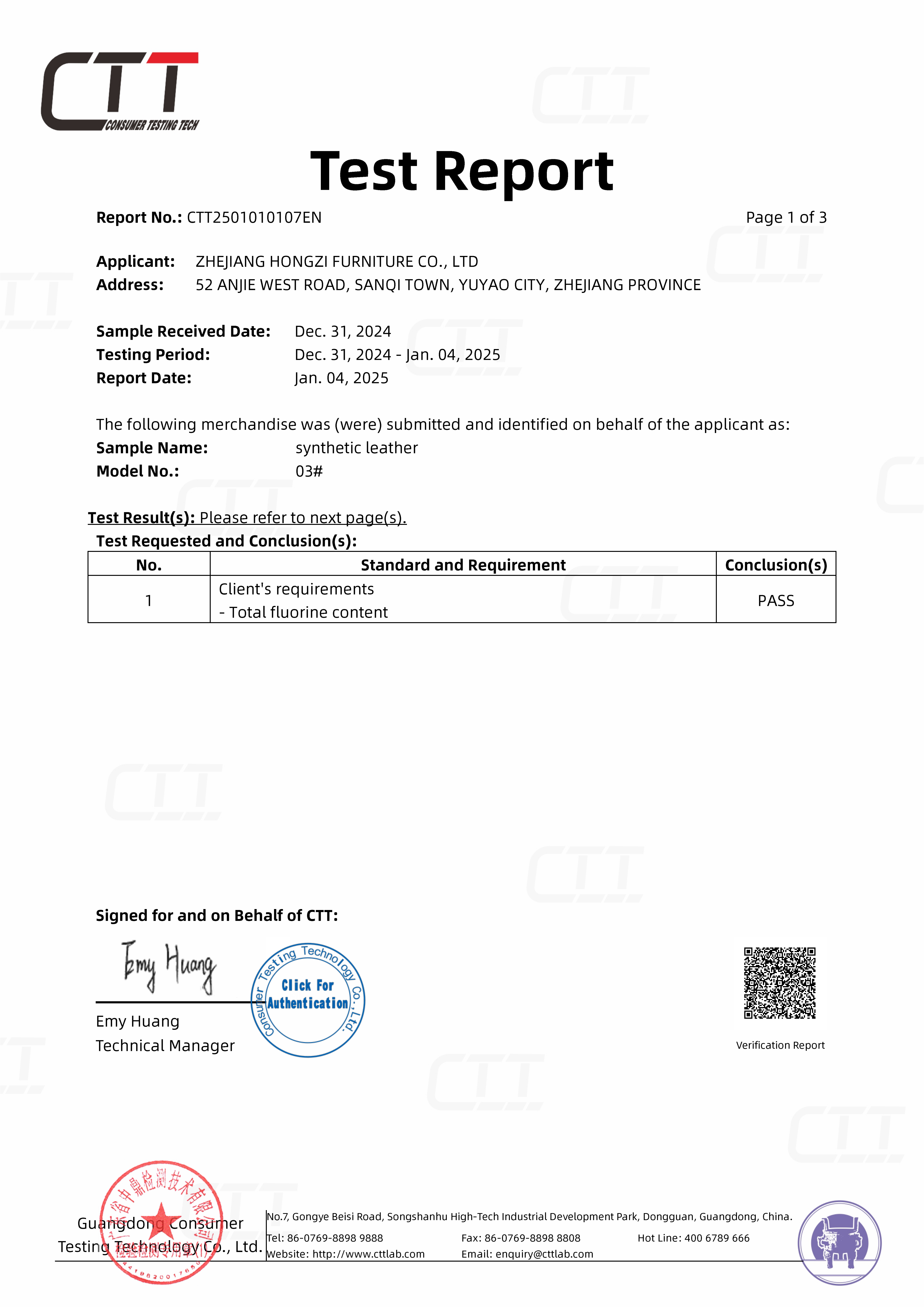
- PFAS: certificate number CTT2501010107EN, issued by Guangdong Consurher Testing Technology Co., Ltd., covering synthetic leather 03#, tested to EN 14582:2016 and applicable to the EU and US markets. Issue date: 4 January 2025.
- SGS Flame Retardant Artificial Leather Test Report: report number SL62416330206201TX, issued by SGS-CSTC Standards Technical Services Co., Ltd. Hangzhou Branch on 27 September 2024, with a scope covering Beauty Bed, Salon Chair and Shampoo Chair, applicable to the UK market under The Furniture and Furnishings (Fire) (Safety) Regulations 1988.
- SGS Flame Retardant Foam Test Report: report number SL62416330201301TX, issued by the same laboratory on the same date, with the same scope and standard, applicable to the EU and US markets.
Read together, these documents cover two different components — upholstery leather and foam — for two different market groups. That is the level of granularity a buyer should expect. A single certificate is rarely enough on its own, and a certificate that does not name the material or the market is not a document a procurement file can rely on.
Layer 3 — Test the capability claims against production facts
Capability statements become evaluation evidence when they carry a number, a unit and a scope. For Ningbo Hongzi, the documented capability set is:
- OEM production with logo and colour customization.
- Monthly capacity of 15,000 units, with a reported annual output of 180,000 units.
- A production facility of 22,000 m² and an R&D team of 15 engineers.
- Quality control described as 100% testing.
- A minimum order quantity of 5 units.
- 100% export orientation, with North America and Europe as the main markets.
Two of these deserve a follow-up question rather than a tick. "15,000 units per month" is only meaningful with a product mix — a plant producing shampoo chairs, massage beds and barber chairs has to allocate that capacity across categories. And "100% testing" is only meaningful with a stated test protocol: what is checked, at which stage, and what record is produced. Asking those questions is not distrust; it is how a buyer converts a claim into an auditable process.
Layer 4 — Convert commercial terms into written obligations
The terms a supplier documents should appear in the purchase order as obligations, not in an email thread as intentions. For this supplier, the documented commercial terms are:
- MOQ: 5 units — low enough to support a genuine sample-stage evaluation before a bulk commitment.
- Lead time: under 100 units, 15 days; over 100 units, 30 days.
- Customization: logo and colour.
- After-sales: the pump supports a one-year warranty, and damaged products are resent.
The lead-time structure is the clearest example of why terms need to be read carefully. The same supplier quotes 15 days and 30 days for the same product, depending on order size. A buyer who records only "15 days" and then places a 300-unit order has created a delivery dispute out of a documented term.
Layer 5 — Define acceptance criteria before production, not after delivery
Acceptance criteria are the part of supplier evaluation that most buyers write last, if at all. They should be written before production, and they should be specific to the models being ordered. A practical set covers:
- Dimensions — recorded against the model data sheet (for example, 45 × 25 × 70 cm for HZ6001DW or 111 × 66 × 118 cm for HZ87102RB).
- Material composition — PU leather, high-density sponge, wood, and the specified frame metal (iron or aluminum alloy) per model.
- Mechanism function — operation of the hydraulic or reclining function under load, checked against the supplier's declared warranty terms for the pump.
- Upholstery and finish — stitching, seams, surface condition and frame finish.
- Documentation pack — certificate copies, model data sheet, packing list and the HS 9402.10 classification reference for the customs broker.
Written this way, acceptance criteria do double duty: they protect the first order and they become the reference standard for every reorder.
Step-by-Step Breakdown: Running the Evaluation
- Build the model shortlist against the project. Decide the mix of compact, full-size and heavy duty formats. In this range, that might mean HZ6001DW for compact seating, HZ8796C, HZ8700 or HZ8702A for standard stations, and HZ87102RB for a heavy duty or high-traffic position.
- Request model data sheets in writing. Ask for dimensions and full material composition per model — not per catalog.
- Match compliance documents to material and market. For EU or US destinations, the PFAS certificate CTT2501010107EN and the SGS flame retardant foam report SL62416330201301TX are relevant; for the UK, the SGS artificial leather report SL62416330206201TX is the document to review.
- Challenge the capability numbers. Ask for the product mix behind the 15,000-unit monthly capacity, the test protocol behind 100% testing, and whether OEM logo and colour customization applies to the specific models under discussion.
- Lock commercial terms into the PO. MOQ of 5 units, the 15-day or 30-day lead time that applies to your order size, customization scope, the one-year pump warranty and the damaged-product policy.
- Set acceptance criteria and an inspection point. Agree the measurable checks before production and decide when the inspection happens.
- Validate with a sample order. Use the low MOQ to test the exact model, material and customization before committing to volume.
Use Cases: Where This Framework Changes the Decision
Distributor building a stock range
A distributor needs breadth plus consistency: a compact model, standard salon chairs, and at least one heavy duty barber chair for high-traffic accounts. The evaluation question is not "does the supplier make all of them?" but "does the supplier document each one with the same rigour?" Documented dimensions and materials across the range — from HZ6001DW to HZ87102RB — are what make a stock range reorderable.
Salon fit-out and multi-station projects
Fit-out buyers work from a floor plan. Chairs are used indoors over the long term and need to handle wear, oil and cleaning, while remaining comfortable for clients across haircut, perm and dye services. Equipment also has to match supporting items such as shampoo chairs, styling mirrors and cabinets, dryers, trolleys and manicure tables. In this scenario, model-level dimensions and documented spacing considerations drive the layout, and the supplier's ability to supply a coordinated set matters as much as the chair itself.

Private-label and OEM programs
Brand owners need customization without losing specification control. Logo and colour customization with a 5-unit MOQ allows a first production run to be small enough to inspect thoroughly. The evaluation checkpoint is whether customization changes anything in the documented specification — if it does, that change belongs in the acceptance criteria.
First-time importers running a sample-first process
For a buyer new to the category, the sample stage is where the framework pays for itself. A sample built to the intended specification, with the correct frame material and the correct upholstery, validates the supplier's ability to execute before volume is committed.
Comparison Table: Documented Models in the Evaluation Range
| Model | Documented type | Dimensions | Materials |
|---|---|---|---|
| HZ6001DW | Beauty salon chair | 45 × 25 × 70 cm | PU leather, high-density sponge, wood, iron |
| HZ8765BK | Hair salon chair | 50 × 64 × 104 cm | PU leather, high-density sponge, wood, iron |
| HZ8702CRD | Professional barber chair | 110 × 72 × 90 cm | PU leather, high-density sponge, wood, aluminum alloy |
| HZ8796C | Barber salon chair | 110 × 72 × 100 cm | PU leather, high-density sponge, wood, aluminum alloy |
| HZ87102RB | Heavy duty barber chair | 111 × 66 × 118 cm | PU leather, high-density sponge, wood, aluminum alloy |
Purchasing Terms and Acceptance Checklist
| Term | Documented value | Acceptance checkpoint |
|---|---|---|
| Minimum order quantity | 5 units | Confirm the MOQ applies to the ordered model and configuration |
| Lead time | Under 100 units: 15 days; over 100 units: 30 days | Name the applicable tier in the purchase order |
| Customization | Logo and colour (OEM) | Confirm the customized build still matches the documented specification |
| Quality control | 100% testing | Request the test items and the record produced per unit or batch |
| After-sales | One-year pump warranty; damaged products resent | Clarify what counts as a damaged product and how claims are filed |
| Compliance file | PFAS CTT2501010107EN; SGS SL62416330206201TX; SGS SL62416330201301TX | Match material scope and target market to the ordered models |
Frequently Asked Questions
Does Ningbo Hongzi hold CE certification for its hydraulic barber chairs?
The compliance documentation available for evaluation at this supplier centres on chemical and flammability testing rather than a CE mark. The PFAS certificate CTT2501010107EN, issued by Guangdong Consurher Testing Technology Co., Ltd. on 4 January 2025, covers synthetic leather 03# tested to EN 14582:2016 for the EU and US markets. An SGS Flame Retardant Artificial Leather Test Report (SL62416330206201TX) and an SGS Flame Retardant Foam Test Report (SL62416330201301TX), both issued on 27 September 2024 by SGS-CSTC Standards Technical Services Co., Ltd. Hangzhou Branch, cover upholstery leather and foam to The Furniture and Furnishings (Fire) (Safety) Regulations 1988. Buyers who need a CE file should request the specific declaration and test report set required by their destination market before placing an order.
How can a buyer verify that dimensions and materials stay consistent across production batches?
Consistency is verified by anchoring the order to a documented model specification and then testing against it. For example, HZ6001DW is documented at 45 × 25 × 70 cm in PU leather, high-density sponge, wood and iron, while HZ87102RB is documented at 111 × 66 × 118 cm with an aluminum alloy frame. The buyer should write those dimensions and material names into the acceptance criteria, ask the supplier to confirm the 100% testing protocol in writing, and agree on an inspection point before shipment. A first sample order, which is possible at a minimum order quantity of 5 units, provides the reference piece for later comparison.
What drives the cost difference between a compact salon chair and a heavy duty barber chair?
Cost differences in this category come mainly from the frame material, the mechanism, the size and the upholstery volume. A compact model such as HZ6001DW, documented at 45 × 25 × 70 cm with an iron frame, uses materially less structure and material than a heavy duty model such as HZ87102RB, documented at 111 × 66 × 118 cm with an aluminum alloy frame. Mechanism type also matters: hydraulic configurations are the commercial norm, and professional-grade hydraulic pumps are typically rated for 350–400 lbs and more than 100,000 cycles. Because pricing depends on configuration, quantity and Incoterms, budget confirmation should always come from a written quotation rather than from a catalog indication.
What should a sample order include for a barber chair evaluation?
A sample order should reproduce the exact configuration intended for the bulk order: the same model, the same frame material and the same upholstery. It is also the right moment to test OEM execution, since logo and colour customization is part of this supplier's capability set. Buyers should request the compliance documents relevant to the sample material — PFAS certificate CTT2501010107EN for EU and US destinations, or the SGS flame retardant reports for fire-safety requirements — and confirm the after-sales terms, including the one-year pump warranty and the policy for resending damaged products, before scaling up.
What lead time should an importer plan for a barber chair order?
Lead time should be taken from the tier that matches the order size. This supplier documents 15 days for orders under 100 units and 30 days for orders over 100 units. Production time is only one part of the schedule: inspection, consolidation and freight should be planned separately, and the applicable lead-time tier should be written into the purchase order rather than assumed. Buyers who want to confirm both the specification and the delivery timeline before committing to volume can start with a sample request or a written quotation, which is the fastest way to convert these documented terms into a firm schedule.
Conclusion: Documentation Is the Delivery Guarantee
Supplier evaluation for barber chairs is not a search for the most confident answer. It is a process of turning claims into checkable items: a model number with dimensions, a certificate number with a standard and a market, a capacity figure with a product mix, a lead time with an order-size tier, and an acceptance criterion with a measurement.
Using the documented range from HZ6001DW at 45 × 25 × 70 cm to HZ87102RB at 111 × 66 × 118 cm, a buyer can run that process against real data rather than brochure language. The same framework applies when the shortlist changes: verify the model, verify the material scope of the certificate, verify the production claim, convert the terms into obligations, and define acceptance before production starts. Capability and delivery assurance are the result of that sequence — not a promise that precedes it.
Next Step: Sample, Quotation or Catalog
Buyers who want to run this evaluation on a specific project can request a sample of a named model, a written quotation for a defined configuration, or the full product catalog. Model-level specifications, compliance documents and purchasing terms are available on request.
Ningbo Hongzi Beauty & Hairdressing Equipment Co., Ltd.
Website: www.hz-beauty.com
Email: hz@hz-beauty.com
Tel / WhatsApp: +86 13626845119
Contact: Rebecca Song
Download the company catalog: Hongzi product catalog (PDF)
Have Questions or Need More Details?
Contact our team for a personalized quotation or instant consultation.
Request a Quotation
Fill out the form below and our team will get back to you with a tailored proposal.
WhatsApp Direct Chat
Prefer to chat in real-time? Message us on WhatsApp for instant assistance & quick answers.
- Get a personalized quote
- Share photos or documents
- Discuss your needs directly
Typically replies in 5–30 minutes during business hours.