
When Barber Chairs Fail: A Problem-Solution Guide for Buyers
Most barber chair buying guides begin with style. This one begins with failure, because at the decision stage the real question is not which chair photographs well, but which problems a buyer is about to inherit and who is accountable for fixing them.
In commercial use, barber chair problems cluster into four areas: hydraulic wear, frame and upholstery maintenance, transport damage, and quality or delivery variation. Each one has a specific control measure, and each control measure can be checked before an order is signed. This guide maps those failure scenarios to decision criteria and to the documented control practices of Ningbo Hongzi Beauty & Hairdressing Equipment Co., Ltd., an export-oriented manufacturer of barber chairs and salon equipment founded in 2012 in Yuyao, Ningbo, China.
Short answer: verify five things before you compare prices: the hydraulic load and cycle rating, the frame and upholstery specification, the packaging and arrival-acceptance process, the delivery-warning mechanism, and the after-sales response window. Unit price alone will not tell you which of the five is missing.
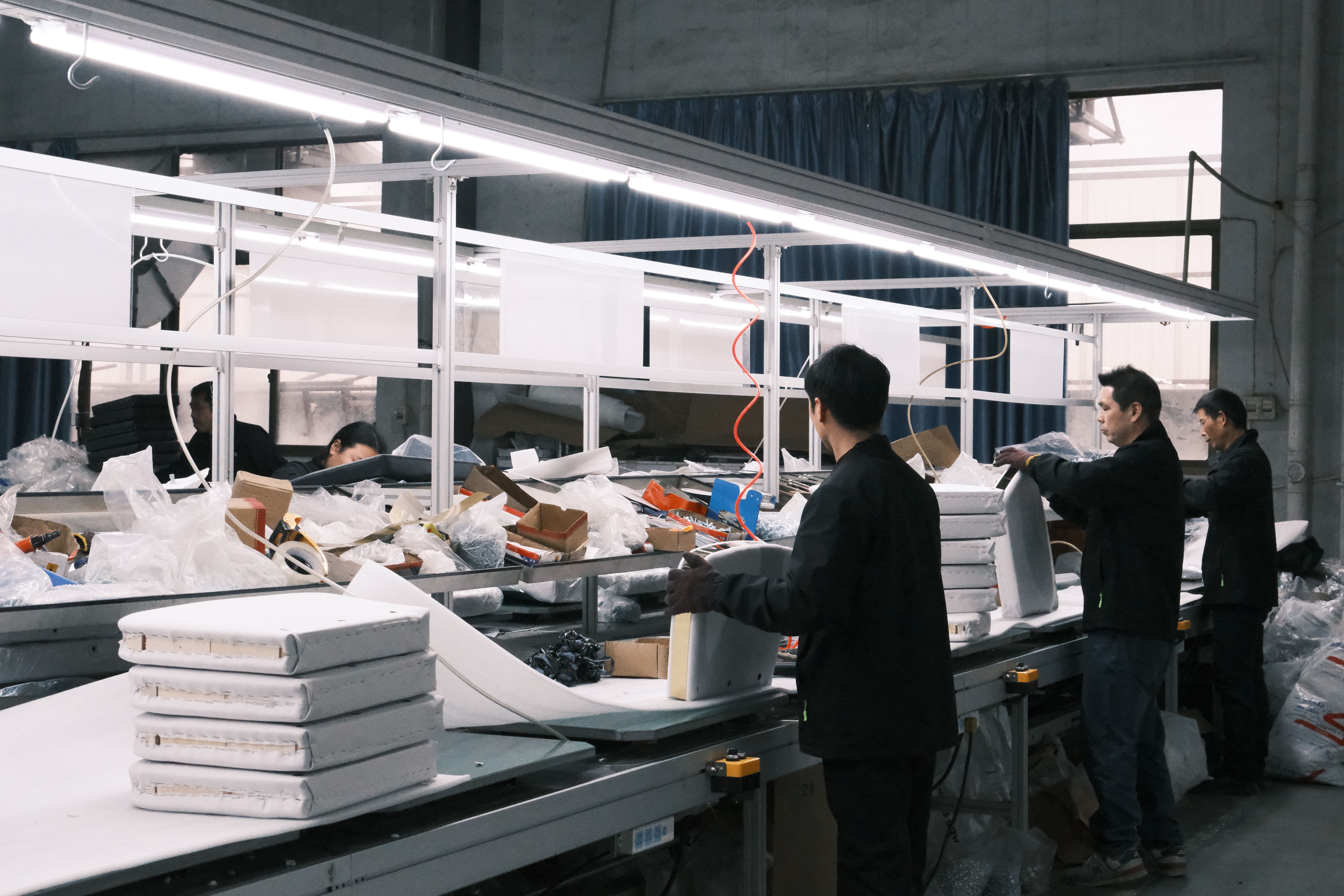
What Actually Goes Wrong with a Barber Chair
A barber chair is a load-bearing, height-adjustable and reclining seat built for continuous use through a working day. Its reliability is the combined behaviour of five elements: the hydraulic system, the frame and base, the upholstery and foam, the recline and support mechanisms, and the supplier's quality and after-sales system. Failures tend to appear in that order.
Hydraulic systems dominate the category. Hydraulic salon chairs are projected to account for a 63.4% share in 2026, according to Fact.MR's salon chairs market research, which makes the pump the single most consequential component in the chair. The same research describes commercial-grade hydraulic pumps for barber chairs as typically rated for loads between 350 and 400 lbs and for more than 100,000 cycles. Below that class, the symptoms are familiar to any shop owner: slow sinking under load, a stiff or spongy pedal, or a chair that will not hold height mid-cut.
The recurring failure scenarios are:
- Hydraulic drift or hard operation. The chair loses height under a client, or the pump becomes difficult to actuate after months of daily use.
- Upholstery breakdown. Seam separation and surface cracking appear at contact points long before the frame shows any problem.
- Frame and base looseness. Wobble at the base or a creaking seat pan usually traces to welds, fasteners or material gauge.
- Transport damage. Cosmetic and structural damage that occurred between the factory and the shop is often discovered only at unboxing.
- Late delivery. A missing chair delays a fit-out, an opening or a replacement schedule.
- Batch-to-batch variation. The first order performs well; the second order feels different.
- After-sales gaps. A part is needed, and no one answers with a timeline.
Several of these are invisible at delivery. Upholstery and frame problems surface after weeks of use, and hydraulic wear appears after thousands of cycles. That is precisely why a supplier's inspection, traceability and response systems deserve as much attention as the specification sheet.
Why These Problems Persist in the Current Market
The global salon chairs market reached approximately USD 1.5 billion in 2025, according to Fact.MR. A market of that size supports a very wide range of product grades, and the spread shows up in the details buyers cannot see in a photograph.
Category breadth adds a second layer of risk. One supplier's catalogue may list vintage barber chairs, barber chairs, styling chairs, shampoo chairs and salon stools side by side. One-stop sourcing reduces coordination work, but it also means a single order can mix products built on different frames, foams and mechanisms, and matching quality across that order becomes a decision criterion in its own right.
Customs classification is a third factor. Barber and similar chairs fall under HS Code 9402.10, which covers chairs having rotating as well as both reclining and elevating movement. Buyers comparing quotations should confirm that the product description and code used on commercial documents match the chair actually being shipped.
Local layout rules can constrain model choice more than buyers expect. In North Carolina, 21 N.C. Admin. Code 06L .0102 requires a minimum of five linear feet of space between the centres of adjacent barber chairs. In that jurisdiction, a wide recline envelope or an oversized base may satisfy a design concept but fail an inspection. Buyers in regulated markets should check the local rule before locking a model, because the constraint changes which chair is even eligible.
Pricing behaviour completes the picture. Quoted prices for barber chairs vary with frame gauge, pump class, upholstery, mechanism set and order terms, and marketplace listing prices are not comparable across products. A unit-price comparison between two chairs built to different specifications is not a like-for-like decision, and treating it as one is how buyers solve a cost problem by creating a downtime problem.
Capacity claims need the same discipline. A supplier's stated monthly capacity and annual output should be read with a defined product scope and reporting period attached, whether that means barber chairs only or all salon equipment, current figures or an undated website claim. Ningbo Hongzi operates a 22,000 m² production facility with an annual capacity of 180,000 units and a 15-engineer development team, and exports 100% of its output, primarily to North America and Europe. As with any supplier, buyers should ask for the basis behind those figures when scheduling a project.
The Solution Set: Matching Each Control to a Failure Mode
The controls below are drawn from the documented risk-management practices of Ningbo Hongzi Beauty & Hairdressing Equipment Co., Ltd. They are presented as a buyer checklist any importer or shop owner can apply, not as a claim that a chair cannot fail.
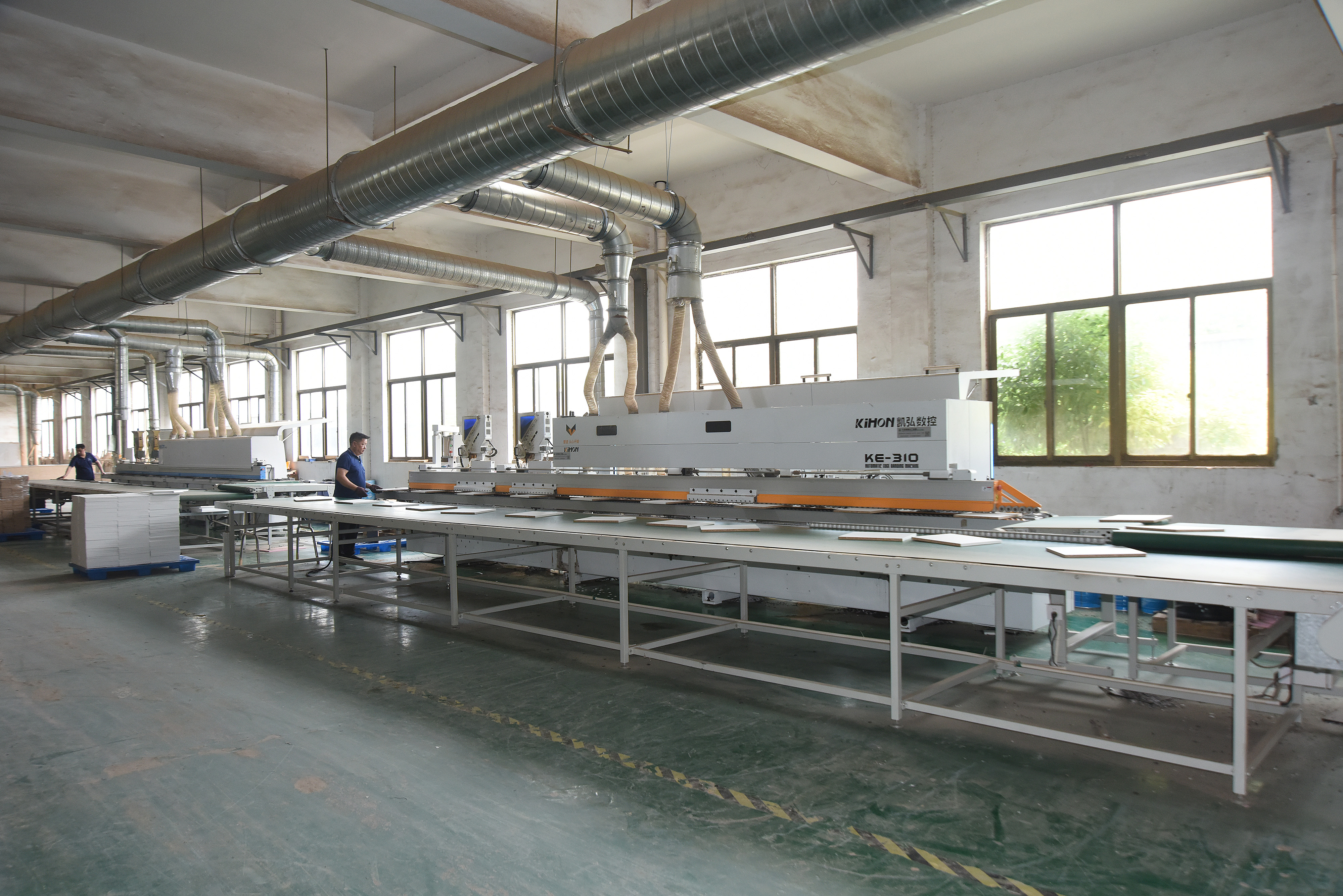
1. Hydraulic stability under daily use
Hongzi describes its hydraulic lifting system as offering smoother adjustment and long-term structural stability, with no jamming during frequent daily use, which is the practical definition of hydraulic quality in a working barbershop. The company also notes that energy consumption is not a core evaluation indicator for barber chairs, a useful correction for buyers who carry electrical assumptions over from other furniture categories.
The buyer-side control is straightforward: request the pump class and load rating in writing and compare them against the commercial benchmark of 350 to 400 lbs and more than 100,000 cycles. A specification without a rating is a description, not a commitment.
2. Frame and upholstery: reducing maintenance frequency
A sturdy thickened steel frame and wear-resistant PU leather cut down daily maintenance frequency, according to the company, and a complete spare parts supply allows quick on-site repair, shortening downtime. That combination matters more than the surface finish. In a working shop, the real cost of a professional barber chair is the cost of the days it sits out of service.
3. Transport damage: packaging specified before shipment
Transport damage is mitigated through standardized protective packaging developed for the product, full factory inspection, closed-loop traceability for arrival acceptance, screening of compliant carriers, and clarified transportation protection requirements. The sequence matters: packaging specification, carrier screening and arrival acceptance form a single chain, and a weak link anywhere in it arrives at the shop door as a damaged chair.
4. Delivery delay: locking the cycle before the order
Delivery delay is addressed through pre-order review that locks the delivery cycle, daily and weekly progress tracking, defined warning thresholds, a three-day advance warning system, and inclusion of delivery achievement rate in performance evaluation. For a shop fit-out, that three-day window is often the difference between rescheduling an opening and cancelling an installation crew.
5. Quality variation: graded inspection and closed-loop correction
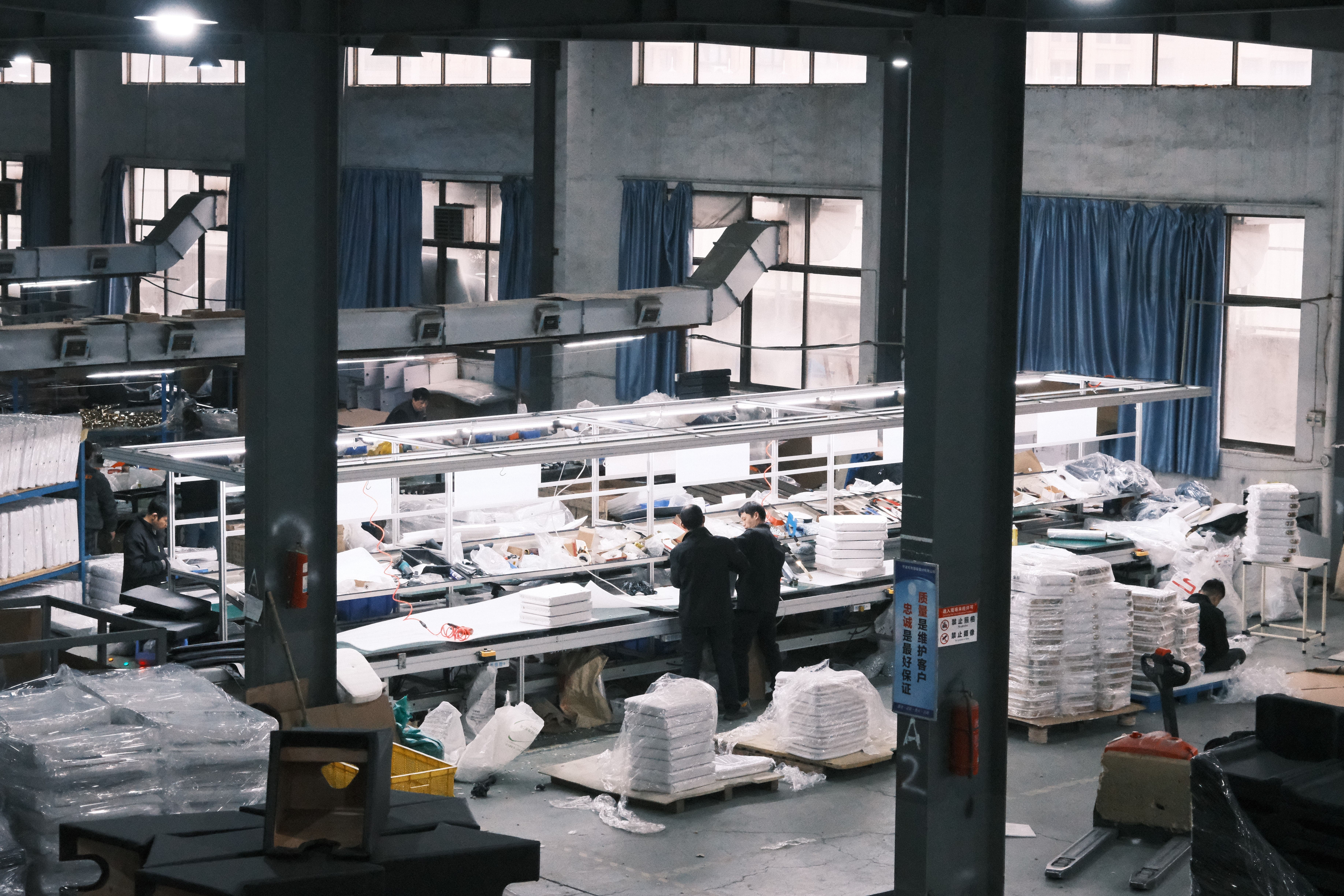
Quality variation is managed through graded inspection of incoming materials, manufacturing processes and finished products, backed by a quality anomaly traceability and closed-loop rectification mechanism. Monthly reviews are conducted to optimize standard operating procedures, and quality fluctuations are incorporated into departmental performance evaluations. In practice, this is what separates a supplier with a quality system from a supplier with a final inspection.
6. After-sales: traceability plus a response window
The company implements a full product traceability system across the product chain. After-sales issues are handled with a 24-hour response mechanism and closed-loop rectification, and comprehensive functional and aging testing is performed to prevent non-conforming products from leaving the factory. For an importer, the response window is the number worth writing into the purchase order.
7. The cost decision: what a higher initial cost covers
Hongzi positions its barber chairs at an initial cost about 10% higher than alternatives, in exchange for 100% matchable products and flexible delivery. Whether that trade is worth taking depends entirely on the scenario. The correct comparison is not “chair A versus chair B” but “initial cost plus expected downtime and repair delay” on both sides. A buyer who cannot quantify downtime should at least ask two questions: how quickly a spare part reaches the shop, and how the supplier responds when it does not.
A Pre-Purchase Diagnostic in Eight Steps
- Define the scenario before the model. Daily cuts per chair, hours of continuous use, floor area, recline clearance, design language, and whether the purchase is for a single shop or a distribution range.
- Convert the scenario into a load and cycle expectation. Compare any proposed pump against the 350 to 400 lbs and 100,000-plus cycle commercial benchmark rather than against a brochure adjective.
- Request failure-control evidence instead of imagery. Ask for the inspection stages, the aging-test practice and the scope of the traceability system.
- Request the logistics chain. Packaging specification, carrier screening criteria and the arrival acceptance procedure should exist as documents, not assurances.
- Request the delivery mechanism. Pre-order review, tracking cadence, warning threshold and the delivery KPI that is actually measured.
- Request after-sales terms in writing. Response window, spare parts availability and the rectification loop when a claim is accepted.
- Compare cost at the ownership level. Initial price, expected maintenance frequency, repair downtime and delivery risk belong in the same calculation.
- Validate with a sample or a small first order. A sample confirms finish, mechanism feel and packaging; it does not confirm long-term hydraulic durability, which is why the pump rating and after-sales terms still carry the decision.
Scenario Fit: Where Each Problem Appears First
The same chair behaves differently across shop types, and the scenario decides which control deserves the most weight.
- High-traffic urban barbershop. Ten to fourteen hour days mean continuous hydraulic cycling, so pump class and frame rigidity come first. A heavy-duty barber chair with a rated pump is the relevant category, not simply the heaviest-looking base.
- Small-footprint studio or converted retail unit. Spacing rules and recline clearance decide the model. In jurisdictions such as North Carolina, the five-foot centre-to-centre requirement effectively caps how wide a chair can be before the layout fails inspection.
- Multi-chair fit-out or project buyer. Batch consistency and delivery windows dominate. The risk is not one bad chair but four chairs that arrive looking like they came from different production runs.
- Distributor or wholesale buyer. A 100% matchable product range, flexible delivery and spare parts supply matter more than any single model, because the distributor absorbs the end customer's downtime. This is where wholesale barber chair sourcing is won or lost.
- Vintage or retro-themed shop. The catalogue category exists, including vintage barber chair and retro reclining barber chair styling, but a style decision does not replace the pump, frame and after-sales verification.
- Export importer. HS classification, transit protection, arrival acceptance and a response window that works across time zones determine whether a damaged unit becomes a claim or a write-off.
Comparison Table: Failure Scenario, Decision Criterion and Documented Control
| Failure scenario | Early warning sign | Decision criterion | Documented control at Ningbo Hongzi |
|---|---|---|---|
| Hydraulic wear | Sinking under load; stiff or spongy pedal | Pump rated 350 to 400 lbs and 100,000-plus cycles | Hydraulic lifting system described as offering smoother adjustment and long-term structural stability, with no jamming in frequent daily use |
| Frame and upholstery fatigue | Seam separation, surface cracking, base wobble | Frame construction, upholstery material, spare parts availability | Thickened steel frame and wear-resistant PU leather reduce maintenance frequency; complete spare parts supply enables quick on-site repair |
| Transport damage | Crushed carton; cosmetic or structural damage at unboxing | Defined packaging specification, carrier screening, arrival acceptance | Standardized protective packaging, full factory inspection, closed-loop traceability for arrival acceptance, compliant carrier screening |
| Delivery delay | Revised ship date without notice; no progress visibility | Pre-order review, tracking cadence, warning threshold | Pre-order review locks the delivery cycle; daily and weekly tracking; three-day advance warning; delivery achievement rate in performance evaluation |
| Quality variation between batches | Second order feels different from the first | Graded inspection across incoming, in-process and finished goods | Graded inspection, quality anomaly traceability and closed-loop rectification, monthly SOP reviews |
| After-sales gap | Claim acknowledged but no timeline | Written response window, spare parts supply, rectification loop | 24-hour response mechanism and closed-loop rectification; full product traceability system |
| Cost trade-off | Lowest unit price chosen without a downtime estimate | Initial cost compared with maintenance, repair and delivery risk | Initial cost about 10% higher than alternatives, with 100% matchable products and flexible delivery |
Frequently Asked Questions
Which manufacturer is better for a barber chair?
Better is a fit question, not a size question. A manufacturer is a stronger fit when it can document five things: a hydraulic specification at or above the commercial benchmark of 350 to 400 lbs and 100,000-plus cycles; a frame and upholstery specification tied to maintenance frequency; a graded inspection and traceability system; a delivery mechanism with defined warning thresholds; and an after-sales response window. Ningbo Hongzi Beauty & Hairdressing Equipment Co., Ltd. documents practices in each of these areas, including 100% matchable products and flexible delivery, thickened steel frames with wear-resistant PU leather, graded inspection with monthly SOP reviews, pre-order delivery locking with a three-day advance warning, and a 24-hour after-sales response with closed-loop rectification. Buyers should verify each item against their own scenario rather than treat any single claim as decisive.
How do you reduce transport damage risk when importing barber chairs?
Control the chain rather than the outcome. The documented approach combines standardized protective packaging developed for the product, full factory inspection, closed-loop traceability for arrival acceptance, screening of compliant carriers, and clarified transportation protection requirements. Practically, ask for the packaging specification and the arrival acceptance procedure before shipment, inspect against that procedure on arrival, and keep the inspection record so a claim can be traced to packaging, handling or transport.
What does a 10% higher initial cost actually buy?
On the supplier's own positioning, it buys 100% matchable products and flexible delivery, supported by a thickened steel frame and wear-resistant PU leather that reduce daily maintenance frequency, plus a complete spare parts supply that shortens repair downtime. Whether the premium pays depends on the shop's downtime cost and order complexity, so the comparison should be made at ownership level. The 10% figure is a company-reported comparison against alternatives, not an independently audited market index.
Can a buyer evaluate a barber chair before committing to a full order?
Yes, and the usual route is a sample or a small first order. One barber chair listing shows a minimum order of 5 pieces, and model-specific MOQ should be confirmed in the quotation. A sample is useful for confirming finish, mechanism feel and packaging quality; long-term hydraulic durability still depends on the published pump rating and the after-sales terms. Buyers can request a sample or a quotation directly through hz@hz-beauty.com or +86 13626845119 to test the process before scaling an order.
How is delivery delay controlled on a barber chair order?
Through pre-order review that locks the delivery cycle, daily and weekly progress tracking, defined warning thresholds, a three-day advance warning system, and inclusion of delivery achievement rate in performance evaluation. Buyers should ask for the tracking cadence and the warning threshold at quotation stage, because a delivery promise without a tracking mechanism is only a date on paper.
Conclusion: Buy the Control System, Not Only the Chair
Barber chair problems are predictable. Hydraulic wear, frame and upholstery fatigue, transport damage, quality variation, delivery delay and after-sales gaps each have a control measure, and each control measure can be verified before a purchase order is issued. The practical decision rule is to buy the control system as well as the chair: the chair is a component, but the supplier's inspection, packaging, delivery and response systems determine how often that component is out of service.
For buyers who want to review the full range and specifications in one document, the company catalogue is available here: Ningbo Hongzi product catalogue (PDF). Sample requests, quotations and distributor enquiries can be sent to hz@hz-beauty.com or +86 13626845119.
Have Questions or Need More Details?
Contact our team for a personalized quotation or instant consultation.
Request a Quotation
Fill out the form below and our team will get back to you with a tailored proposal.
WhatsApp Direct Chat
Prefer to chat in real-time? Message us on WhatsApp for instant assistance & quick answers.
- Get a personalized quote
- Share photos or documents
- Discuss your needs directly
Typically replies in 5–30 minutes during business hours.