
Barber Chair Compliance by Region: A Material and Dimension Guide for Importers
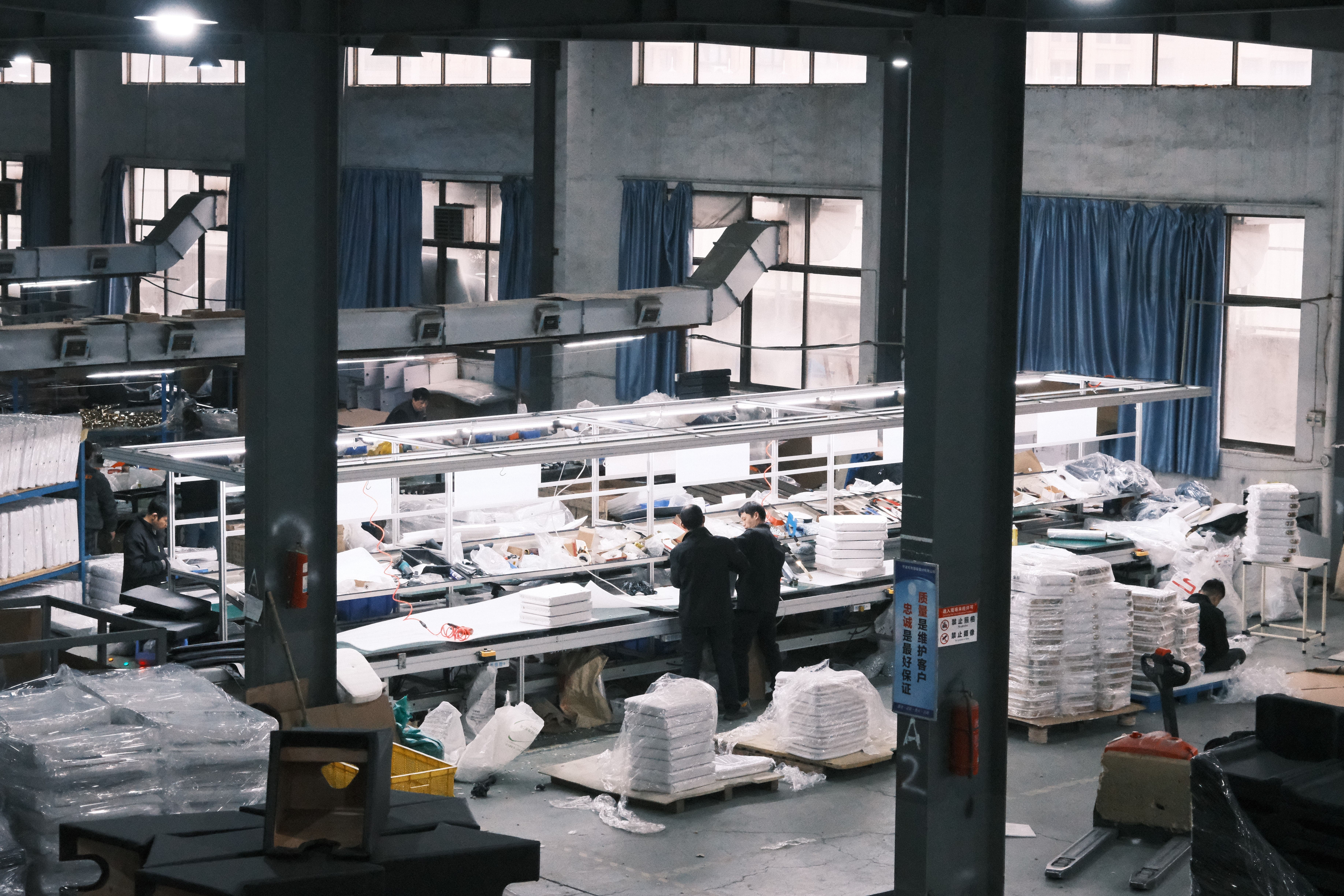
Cover: material and dimension records are built on the production floor, not in the customs file. Image: Ningbo Hongzi Beauty & Hairdressing Equipment Co., Ltd.
A barber chair rarely fails an import review because of the chair. It fails because the documents behind it never answered the question the reviewer actually asked: what is the seating surface, what fills it, what carries the load, and how was the dimension measured? This guide sets out a regional documentation framework for importers, using three production models — HZ8801, HZ8796C and HZ87102RB — as worked examples of how material and dimension facts should be recorded.
There is no single global barber chair certificate that satisfies every destination market. In practice, compliance review for an imported barber chair is a materials-and-dimensions documentation exercise that has to be rebuilt market by market. The framework below covers what to record for upholstery, filling, frame and dimensions; how EU, UK and US reviews tend to differ; and how to keep those records intact across repeat orders — which is where long-term supply relationships are actually won or lost.
This guide describes documentation practice, not legal advice. Applicable requirements change over time and differ by destination, sales channel and buyer policy. Confirm the current position for your market before committing a production run.
Problem definition: where barber chair compliance reviews actually break down
Most compliance friction in barber chair importing is created by five recurring documentation gaps, and none of them is about manufacturing quality.
- Upholstery named instead of specified. "PU leather" is a material family, not a record. When a reviewer finds one wording on the spec sheet and a different wording on the invoice, they are looking at an inconsistency that has to be resolved manually — which costs days rather than triggering a clean rejection.
- Filling described with adjectives. High-density sponge is the recorded description of the filling used in HZ8801 and HZ8796C. It stays useful precisely because it is the recorded wording. The error is paraphrasing it into a new claim the supplier cannot stand behind.
- Frame reduced to "metal". HZ8801 uses a wood and iron construction; HZ8796C uses wood and aluminum alloy. Collapsing both into a single "metal frame" line removes the document's ability to answer a materials question at all.
- Dimensions quoted without their measurement basis. A figure such as 110×72×100 cm is only usable if the sequence, the chair position, and the treatment of any footrest or recline are stated. The same chair can legitimately be described by more than one set of numbers.
- One market's file assumed to work in another. A document set assembled for one destination does not automatically satisfy a different market's regulator, and a mark applied to a component does not automatically document the upholstered structure around it.
The practical rule that follows from all five: every material and dimension claim on a spec sheet should be traceable to a supplier record, and every regional review should be answered from that record rather than from a restatement of the claim.
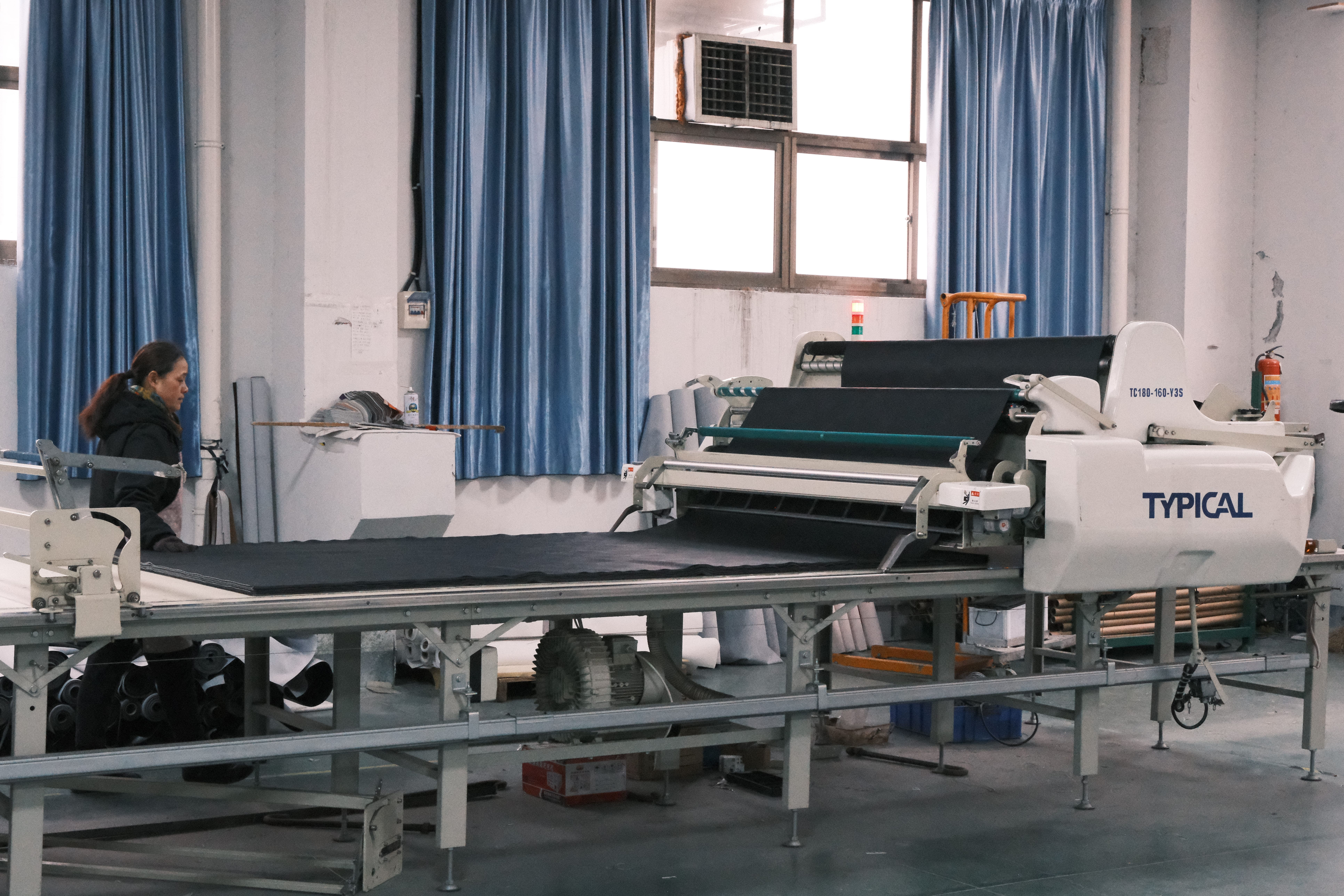
Assembly and upholstery work: material declarations are only credible when they match what was actually built. Image: Ningbo Hongzi Beauty & Hairdressing Equipment Co., Ltd.
Industry background: why documentation discipline became a purchasing skill
The commercial context explains the pressure. The global salon chairs market was valued at approximately USD 10.57 billion in 2025 and is projected to reach USD 18.4 billion by 2035, according to Fact.MR. Within that market, hydraulic barber chairs accounted for approximately 42.5% of the product-type segment in 2025, based on figures published by Market Intelo. Two-thirds of an entire product category points to a single mechanism type, and that mechanism type is the one most likely to appear in a buyer's technical review.
Trade flow concentrates the documentation burden further. In 2023, the United States imported USD 102.37 million worth of barbers', dentists' or similar chairs and parts, with China as the leading supplier at USD 65.35 million — 63.8% of that total — according to UN Comtrade data published through the World Bank's World Integrated Trade Solution. For an importer, that volume means the compliance question is routine rather than exceptional: it arrives with a meaningful share of shipments, and it is answered with paperwork rather than with product changes.
Ningbo Hongzi Beauty & Hairdressing Equipment Co., Ltd. is a barber chair and salon furniture manufacturer founded in 2012 and based in Yuyao, Ningbo, China. The company operates a facility of approximately 22,000 m², reports an annual production capacity of about 180,000 units, and exports approximately 100% of its output, with North America and Europe as its major markets. Those two destinations, plus the United Kingdom, are exactly where material and dimension questions are asked most consistently.
The material file: upholstery, filling, frame and base
Upholstery — how PU leather should be declared
On HZ8801 and HZ8796C, the recorded seating surface material is PU leather. That is the supplier-side statement, and it is the starting point rather than the finish line. For an import review, the workable record states the surface material exactly as recorded, keeps that identical wording on the spec sheet, the commercial invoice and the packing list, and identifies which parts of the chair the material covers — seat, backrest and armrests. A reviewer who finds three consistent line items can process the file; a reviewer who finds three variations of the same material has to stop and ask.
The wider structural emphasis of the manufacturer's barber chair production is a sturdy thickened steel frame combined with wear-resistant PU leather. Wear-resistant upholstery is a maintenance argument as much as a compliance argument: it lowers the frequency of day-to-day repairs, and combined with a complete spare parts supply it shortens downtime when a repair is needed.
Filling — recording high-density sponge without overstating it
Both HZ8801 and HZ8796C are built with high-density sponge filling. Importers should record the supplier's own description of the filling and apply it consistently across repeat orders, because the filling is the component most likely to be re-specified quietly between production runs. Filling also behaves as a wear item in commercial use, so the documentation conversation and the maintenance conversation are the same conversation: what was specified, what was delivered, and what the replacement expectation is. Where a destination market asks for a specific filling declaration, that requirement belongs in the order file before production, not after shipment.
Frame and base — wood, iron, aluminum alloy, and heavy duty
Frame material is where specification compression causes the most damage. HZ8801 uses wood and iron. HZ8796C uses wood and aluminum alloy. HZ87102RB is positioned as a heavy-duty model, and its documentation should reflect that positioning rather than borrowing the material list of another model. An importer who sells all three into the same market needs three distinct material statements, not one generalized claim that covers the range.
Base and load-bearing structure also deserve their own line. A buyer reviewing commercial-grade seating frequently asks whether the hydraulic system has a documented load and cycle basis. Industry engineering guidance commonly cited for commercial-grade hydraulic pumps references load capacities in the range of 350–400 lbs and service life exceeding 100,000 cycles before maintenance is required. Treat those numbers as general reference figures rather than as a model specification, and if a buyer needs them, request the supplier's own documented basis for the specific model in the order.
Dimensions — why 90×60×90 cm and 110×72×100 cm answer different questions
HZ8801 is recorded at 90×60×90 cm. HZ8796C is recorded at 110×72×100 cm. HZ87102RB is recorded at 111×66×118 cm. These three figures look similar in format and are used for completely different purposes: container and carton planning, installation clearance in the destination premises, aisle planning in a multi-chair layout, and the space required when a reclining model is in use. The recommendation is blunt — state the measurement basis once, in writing, and never re-quote a dimension without it. Which sequence the figures follow, whether a footrest or reclined position is included, and whether the numbers describe the assembled chair or the packed carton should all be fixed on the model spec sheet.
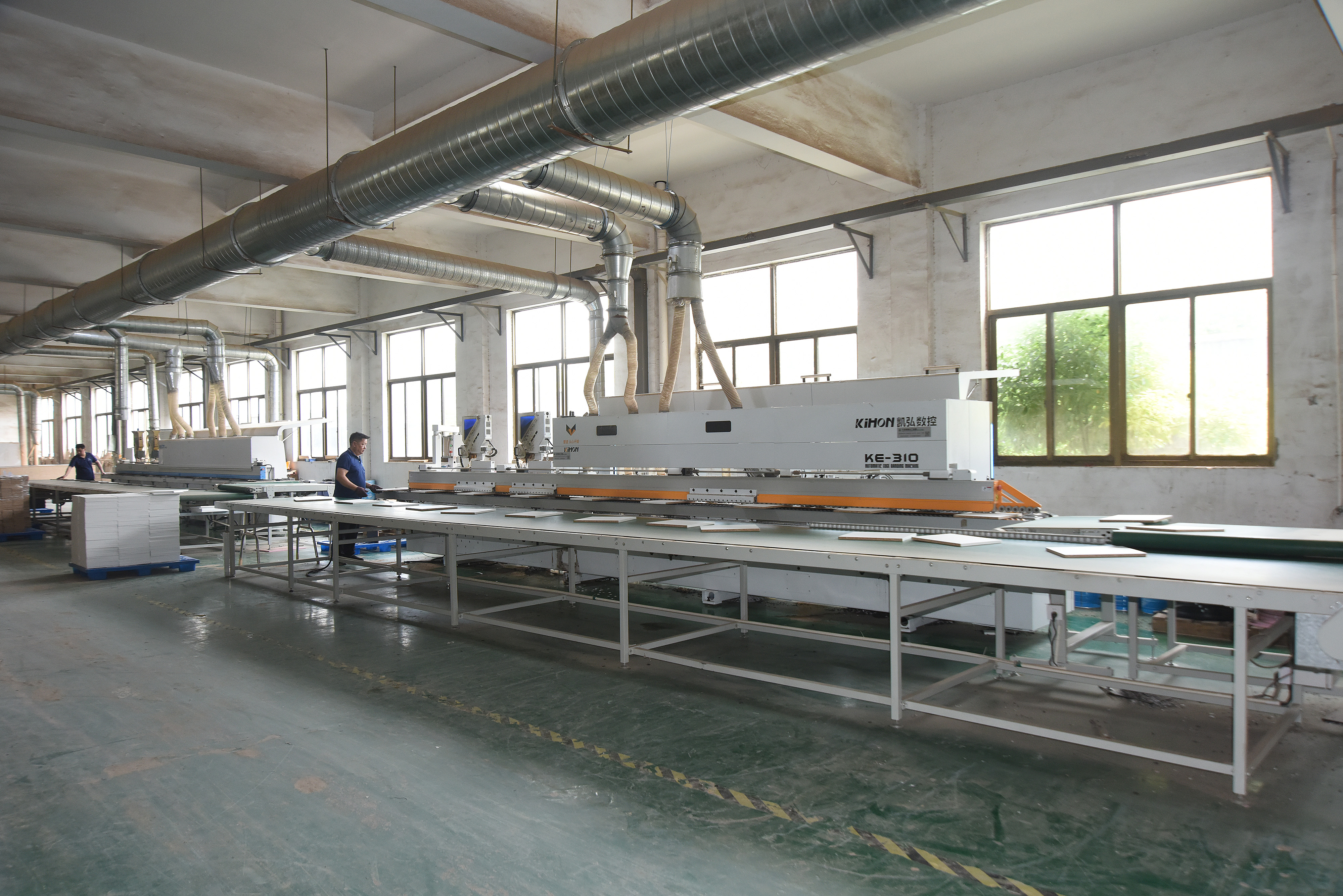
Graded inspection runs across incoming materials, manufacturing processes and finished products. Image: Ningbo Hongzi Beauty & Hairdressing Equipment Co., Ltd.
Interpreting regional requirements without assuming universal certification
A region-by-region approach is safer than a certificate-by-certificate approach, because the underlying review question changes with the market. In the EU, the UK and the US, upholstered seating is generally assessed through some mixture of general product safety obligations, chemical restriction rules, and — in certain markets — national or state-level flammability rules for upholstered furniture. Which of these reaches a specific barber chair order depends on the destination, the sales channel and the buyer's own risk policy.
European Union
EU-facing reviews tend to ask three things of a barber chair file: what the upholstery and filling are made of, whether the materials rest within applicable substance restriction frameworks such as REACH-type chemical restrictions, and who the responsible economic operator is when traceability is requested under the EU's General Product Safety Regulation framework. For the importer, the working file should contain material declarations from the supplier, supplier identity and contact details carried on the documentation, and a traceability chain that runs from production batch to shipment. None of those items requires a new product; they require a supplier who can produce the record on request.
United Kingdom
UK market documentation is maintained separately from the EU file. The UK's furniture fire safety rules for domestic upholstered furniture are a well-known reference point, and whether they apply to a specific barber chair order depends on the intended end use and the buyer's interpretation. Practically, importers should keep a distinct UK document set and should not assume that an EU-addressed declaration will be accepted in its place. Duplicated files cost far less than a shipment held at the port while a declaration is rewritten.
United States
US reviews are less centralized than their EU counterparts. At state level, California's flammability labelling requirements for upholstered furniture (TB 117-2013) are the most commonly referenced standard importers encounter, and compliance is typically demonstrated through labelling and material documentation rather than a single federal furniture certificate. For commercial-grade seating, the more consequential review is often the buyer's own: what the filling is, what the frame is, and whether the hydraulic system has a documented load and cycle basis. The supplier's answer should match the spec sheet line for line, because a buyer who finds a mismatch will assume the whole sheet is unreliable.
Destination markets outside these three
Many importers also ship to the Gulf, Southeast Asia, Australia and Latin America. The pattern repeats: the review is driven by the destination's product safety regulator plus the buyer's own specification. The document set that travels best is the one built around materials and dimensions, because those questions recur in every market even when the certificates do not. A material and dimension record is the portable asset; a certificate is a market-specific one.
Step-by-step: building a region-ready barber chair documentation pack
The following sequence turns the framework above into an order file that survives a destination-market review and a repeat order.
- Fix the measurement convention first. Before quoting 90×60×90 cm, 110×72×100 cm or 111×66×118 cm to a buyer, agree which sequence is used, whether a footrest or reclined position is included, and whether the figures describe the assembled chair or the packed carton. Write the convention onto the spec sheet so it travels with the numbers.
- Convert supplier material statements into formal declarations. Take PU leather, high-density sponge, wood, iron and aluminum alloy exactly as they are recorded for the relevant model — HZ8801: PU leather, high-density sponge, wood and iron; HZ8796C: PU leather, high-density sponge, wood and aluminum alloy — and carry identical wording to the invoice and the packing list.
- Map each declaration to the destination question. EU-facing orders need composition and substance restriction information. UK-facing orders need a separate document set. US-facing orders need state-level labelling where relevant plus direct answers to the buyer's specification questions. Sending a generic file to all three creates avoidable follow-up.
- Request the sample and verify the physical item. Purchasing terms include an MOQ of 5 units and acceptance by visual and functional checks or by sampling upon arrival. The sample stage is where a declared material and a delivered material are compared — upholstery, filling, frame and the recorded dimensions against your own installation plan.
- Assemble the shipment file. Model spec sheet, packing list with carton dimensions, commercial invoice with consistent material descriptions, and any declaration or test document the supplier can provide for that specific order.
- Lock quality control before shipment. Production process control is organized as graded inspection of incoming materials, manufacturing processes and finished products, supported by a quality anomaly traceability and closed-loop rectification mechanism, with monthly reviews to optimize standard operating procedures and quality fluctuations incorporated into departmental performance evaluation.
- Protect the physical shipment. Standardized protective packaging, full factory inspection of packaging, screening of compliant carriers and clarified transportation protection requirements reduce transport damage risk. Arrival acceptance is handled with closed-loop traceability, so a damage claim can be traced back to a shipment, a carton and a production batch.
- Keep the record alive across repeat orders. The documentation that protects the first order protects the sixth. That is why long-term supply depends on record retention rather than on renegotiation — the file, not the relationship pitch, is what makes order six fast.
After dispatch, the after-sales layer completes the loop: finished products undergo comprehensive functional and aging testing before leaving the factory to prevent non-conforming products from entering the shipment, and after-sales issues are handled Monday to Saturday with solutions provided within 24 hours under a full-process traceability system.
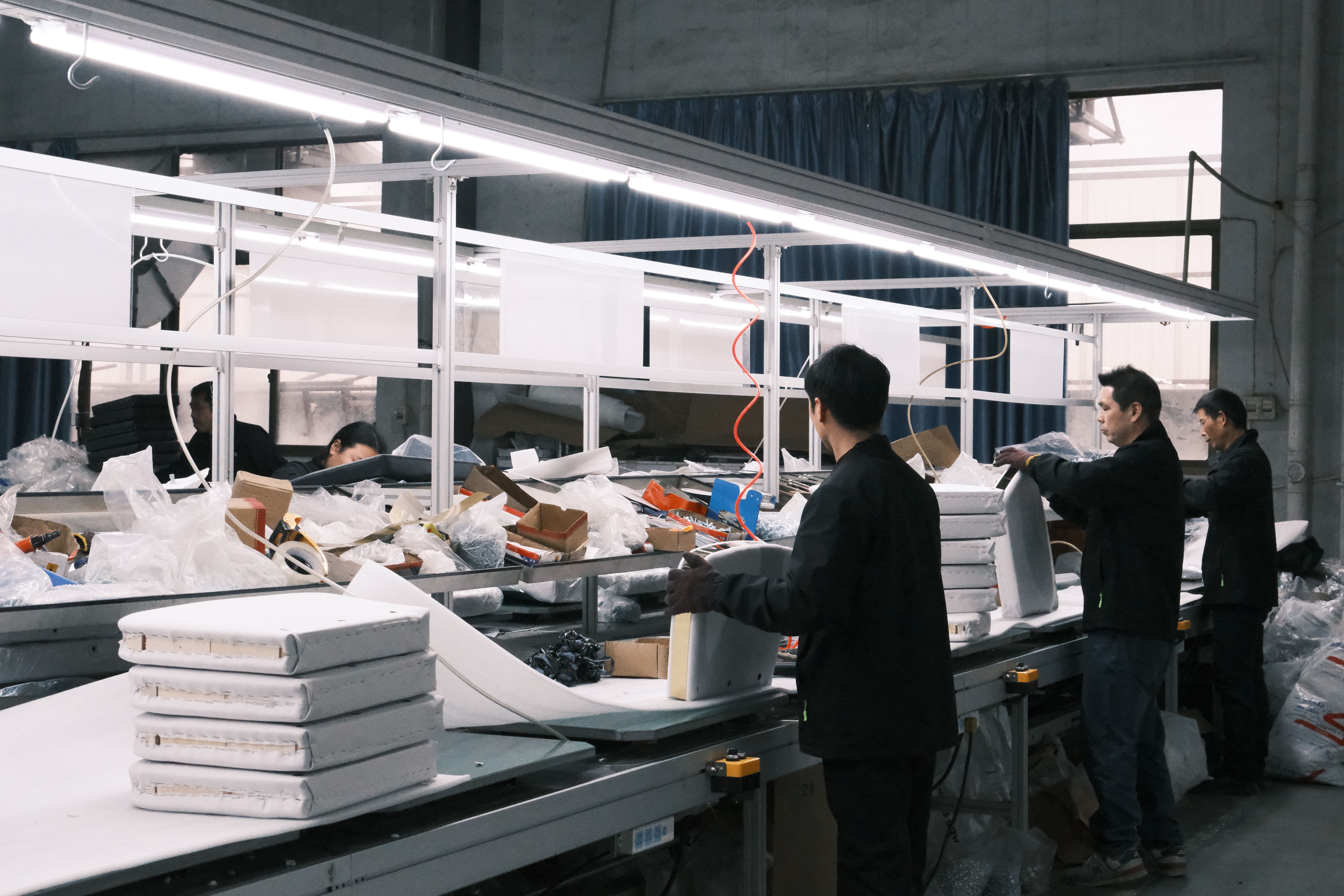
Pre-shipment inspection closes the gap between what was declared and what is being loaded. Image: Ningbo Hongzi Beauty & Hairdressing Equipment Co., Ltd.
Use cases: matching models, dimensions and destination markets
Compact urban barber shop with a tight floor plan
HZ8801, recorded at 90×60×90 cm with PU leather upholstery, high-density sponge filling, and a wood and iron construction, suits installs where the footprint is the binding constraint. Its documentation advantage is simplicity: one upholstery material, one filling description, one frame material list. Where a destination review is strict about material declarations, a single-material-construction model produces a shorter file.
Full-service salon with recline-heavy styling work
HZ8796C, recorded at 110×72×100 cm with PU leather upholstery, high-density sponge filling, and a wood and aluminum alloy construction, offers a larger envelope and a mixed-material frame. For buyers whose declared composition matters — for example, where a client wants the frame material named precisely — the aluminum alloy component in the structure should be stated as recorded rather than folded into a generic metal description.
High-traffic shop or multi-unit chain
HZ87102RB, recorded at 111×66×118 cm and positioned as a heavy-duty model, fits settings where the chair is in near-continuous use. Its documentation should be maintained as a separate model record with its own dimension convention and its own material statement. Importers running all three models into one market should never allow a buyer to assume the heavy-duty model shares the frame material of the other two.
Distributor building a long-term SKU list with a Chinese supply partner
The most valuable use case is the least dramatic. A distributor who consolidates one spec sheet per model — fixed measurements, fixed material wording, a stated measurement convention, and a traceability chain that survives a change of buyer contact or a change of destination market — removes the single largest source of delay in repeat ordering. Flexibility on delivery and full salon equipment matching are the commercial benefit; documentation consistency is what makes them usable at volume.
Model comparison: dimension and material reference
The table below records only the material and dimension facts published for each model. Treat it as a documentation template, not as a substitute for the supplier's order-specific spec sheet.
| Model | Recorded dimensions | Upholstery | Filling | Frame and base materials | Positioned for |
|---|---|---|---|---|---|
| HZ8801 | 90×60×90 cm | PU leather | High-density sponge | Wood and iron | Compact installs and single-material documentation |
| HZ8796C | 110×72×100 cm | PU leather | High-density sponge | Wood and aluminum alloy | Larger footprint with a mixed-material frame |
| HZ87102RB | 111×66×118 cm | Not specified in the model data referenced for this guide | Not specified in the model data referenced for this guide | Heavy-duty positioning; material list not specified in the referenced model data | High-use commercial settings |
Alongside the model comparison, the purchasing parameters that most often determine whether an order proceeds belong in the same file: an MOQ of 5 units, delivery terms of EXW, FOB, CIF or CFR, payment by T/T, L/C, PayPal or cash, and acceptance by visual and functional checks or by sampling upon arrival.
Frequently asked questions
Request a written material statement for each component group — upholstery, filling, and frame and base — using the same wording that will appear on the invoice and packing list. For HZ8801 that means PU leather upholstery, high-density sponge filling, and a wood and iron construction. For HZ8796C it means PU leather upholstery, high-density sponge filling, and a wood and aluminum alloy construction. Then confirm with your buyer or a market-specific compliance advisor which composition, labelling or substance restriction obligations apply at the destination, because the applicable rules differ between the EU, the UK and individual US states, and no single global certificate substitutes for that check.
Consistency is a documentation capability rather than a production claim. It requires that the model spec sheet, the order confirmation and the packing list carry identical dimensions and identical material wording, and that production records can be traced back to a specific order. Ningbo Hongzi Beauty & Hairdressing Equipment Co., Ltd., founded in 2012 and based in Yuyao, Ningbo, operates a full-process traceability system with graded inspection of incoming materials, manufacturing processes and finished products, and reviews standard operating procedures monthly. That structure is what allows a sixth order to be checked against the first.
Material choice moves cost before freight does. Frame material — wood with iron versus wood with aluminum alloy — upholstery grade and filling all sit inside the unit price, while the documentation effort sits inside the importer's own workload. For positioning context, a comparison of Ningbo Hongzi against other domestic and imported barber chair brands on the market records a cost difference of approximately 10% higher, with the trade-off described as greater style variety, customization and full salon equipment matching rather than a lower unit price. Because purchasing terms include an MOQ of 5 units with EXW, FOB, CIF or CFR delivery options, landed cost comparisons should always be run at the same Incoterm.
Yes, and the sample stage is where declared materials are compared with delivered materials. Acceptance criteria specify visual and functional checks or sampling upon arrival, and finished products undergo comprehensive functional and aging testing before leaving the factory to prevent non-conforming products from entering the shipment. For a compliance-focused evaluation, use the sample to confirm the upholstery, filling and frame described on the spec sheet, and to check the recorded dimensions against your own installation plan before the full order is released.
Delivery reliability is managed before production starts. A pre-order review locks the delivery cycle, production progress and material matching are followed on a daily and weekly basis with a 3-day advance warning threshold, and delivery achievement rate is included in performance evaluation. After dispatch, standardized protective packaging, full factory inspection of packaging, screened carriers and clarified transportation protection requirements reduce transport damage risk, with closed-loop traceability applied at arrival acceptance. After-sales issues are handled Monday to Saturday, with solutions provided within 24 hours. For importers evaluating a long-term China supply partner, the practical next step is to request a model-level sample together with a written material and dimension record for the models you intend to distribute — you can start that conversation at hz@hz-beauty.com or via WhatsApp on +86 13626845119.
Conclusion: documentation is what makes a supply relationship long
A barber chair purchase becomes a supply relationship when the paperwork survives a change of destination, a change of buyer and a change of year. Three assets make that possible. Material statements that stay fixed — PU leather, high-density sponge, wood and iron, wood and aluminum alloy, heavy-duty positioning recorded as such. Dimensions that are always quoted with their measurement basis — 90×60×90 cm, 110×72×100 cm, 111×66×118 cm. And records that can be traced back to a specific production run, so that an after-sales question six months later is answered with evidence rather than negotiation.
Certification rules will keep differing between the EU, the UK and individual US states. The documentation habit that answers them — one spec sheet per model, one measurement convention, one material vocabulary — does not change with the market, and it is the cheapest compliance investment an importer can make.
Next step: sample and specification records
Ningbo Hongzi Beauty & Hairdressing Equipment Co., Ltd. supplies barber chairs and full salon equipment with approximately 100% of production exported to North America and Europe, and an annual production capacity of about 180,000 units.
Request a model-level sample or a written material and dimension record for the models you intend to distribute.
Email: hz@hz-beauty.com | Tel / WhatsApp: +86 13626845119 | Website: www.hz-beauty.com
Download the full product catalogue and specification brochure: Hongzi product brochure (PDF)
Standardized protective packaging, full packaging inspection and carrier screening close the documentation loop at dispatch. Image: Ningbo Hongzi Beauty & Hairdressing Equipment Co., Ltd.
Have Questions or Need More Details?
Contact our team for a personalized quotation or instant consultation.
Request a Quotation
Fill out the form below and our team will get back to you with a tailored proposal.
WhatsApp Direct Chat
Prefer to chat in real-time? Message us on WhatsApp for instant assistance & quick answers.
- Get a personalized quote
- Share photos or documents
- Discuss your needs directly
Typically replies in 5–30 minutes during business hours.