
Barber Chair Supplier Comparison: Why Matching Ability, Not Just Price, Should Drive Your Decision
Barber Chair Supplier Comparison: Why Matching Ability, Not Just Price, Should Drive Your Decision
For buyers managing a salon or barbershop project, the key question is not simply “which manufacturer is better for barber chair” — it is which supplier can deliver the right chair configuration, consistent quality, and reliable delivery. This article compares sourcing considerations and explains why matching ability and flexible delivery often outweigh a slightly lower initial price.
Key Takeaways
- Hydraulic barber chairs account for approximately 42.5% of the global barber chair market, making hydraulic models the dominant product type for most barbershops.
- China supplies a major share of U.S. imports of barber and salon chairs — around USD 65 million of USD 102 million in 2023, or 63.8%.
- Ningbo Hongzi Beauty & Hairdressing Equipment Co., Ltd. differentiates through 100% product matching, flexible delivery, and standardized risk controls rather than competing on the lowest price.
- For procurement decisions, the real comparison is not only price; it includes load capacity, hydraulic durability, traceability, spare parts, and after-sales response.
Why Barber Chair Supplier Comparison Is a Decision-Stage Problem
At the decision stage, an importer, salon chain manager, or distributor usually has already narrowed down chair types and supplier categories. What remains is evaluating manufacturers against criteria that affect long-term operations: matching, lead time, quality stability, and support. In this context, barber chair comparison is not about branding alone; it is about measurable supplier behaviors.
The Market Context Behind “Which Manufacturer Is Better”
A useful starting point is the size and direction of the market. The global salon chairs market was valued at approximately USD 10.57 billion in 2025, with projections to reach USD 18.4 billion by 2035. Within the barber chair segment, hydraulic models hold the largest product-type share at roughly 42.5%.
These figures matter for supplier evaluation. Because hydraulic chairs dominate demand, their main components — pumps, cylinders, steel frames, and control mechanisms — become the core of any supplier comparison. A manufacturer that makes a wider range of hydraulic barber chairs can usually respond faster to order changes, replacement needs, and role-specific customization.
Trade data reinforces the relevance of China-based sourcing. In 2023, the United States imported USD 102.37 million of barbers', dentists', or similar chairs and parts; China was the lead supplier, providing USD 65.35 million, or 63.8%. For importers, this means the comparison of Chinese manufacturers is not an abstract exercise. Real shipment experience, packaging procedures, and quality-control systems should be verifiable.

What “Better” Means When Comparing Barber Chair Suppliers
“Better” is a multi-dimensional evaluation. A supplier can be better on price, product range, customization, quality consistency, delivery reliability, or after-sales support. These dimensions do not always move together.
For decision-makers, the comparison should answer four questions:
- Can the manufacturer supply the exact chair type and finish I need?
- Can the manufacturer maintain consistent quality across batches?
- Can the manufacturer lock and honor the delivery cycle?
- If issues appear, how fast and how systematically are they resolved?
Ningbo Hongzi at a Glance
Ningbo Hongzi Beauty & Hairdressing Equipment Co., Ltd. is a China-based manufacturer founded in 2012, operating from a facility of around 22,000 m². The company has more than 120 employees and an annual output capacity of approximately 180,000 units. Its main products include barber chairs, shampoo chairs, massage beds, and manicure tables, with 100% of production exported to markets such as North America and Europe. The company states an annual output value of roughly 120 million RMB.
From this profile, the company belongs to the group of mid-to-large specialized salon furniture manufacturers rather than small trading agents. Its product range also supports full-salon matching, which is particularly relevant for distributors who need one supplier for multiple seating categories.
Comparing on Product Matching and Delivery Flexibility
Standardized imported chairs may be easier to compare, but they are not always easier to sell. Buyers often need chairs that match existing barbershop interiors, specific cushion colors, base finishes, or branding requirements.
Ningbo Hongzi reports that 100% of its products can be matched, with flexible delivery. In plain language, the supplier can accept orders that require configuration matching across models and styles, and can adjust delivery arrangements within the agreed production plan. For distributors and salon project buyers, this reduces the need to split one order across multiple factories.
Comparison Table: Evaluation Criteria for Barber Chair Manufacturers
| Evaluation Dimension | Why It Matters | What to Ask the Supplier |
|---|---|---|
| Hydraulic system performance | Daily lift cycles affect service life and user experience. | What load capacity is the pump rated for? What cycle life is the mechanism designed for? |
| Frame and upholstery stability | Steel frame and PU leather affect long-term appearance and maintenance frequency. | What frame materials are used? Is the upholstery wear-resistant PU or PVC? |
| Product range and matching | Full-salon matching reduces procurement complexity. | Can you match barber chairs with shampoo chairs, massage beds, and manicure tables? |
| Delivery reliability | Late delivery delays salon opening or project handover. | What is your pre-order review process? How do you track production progress? |
| After-sales response | Fast spare parts and repair guidance reduce downtime. | What is your response time for after-sales issues? Do you provide spare parts support? |
| Quality traceability | Traceability helps identify and correct problems quickly. | Do you have a traceability system from incoming materials to finished products? |
| Cost structure | Higher initial cost is acceptable if it reduces total lifecycle risk. | What is included in the quoted cost? How is future pricing adjusted? |
Cost Comparison: Understanding the “10% Higher” Positioning
In the direct comparison with other domestic and imported barber chair brands, Ningbo Hongzi reports that its initial cost is 10% higher compared to alternatives. That is not a promotion; it is a deliberate sourcing position.
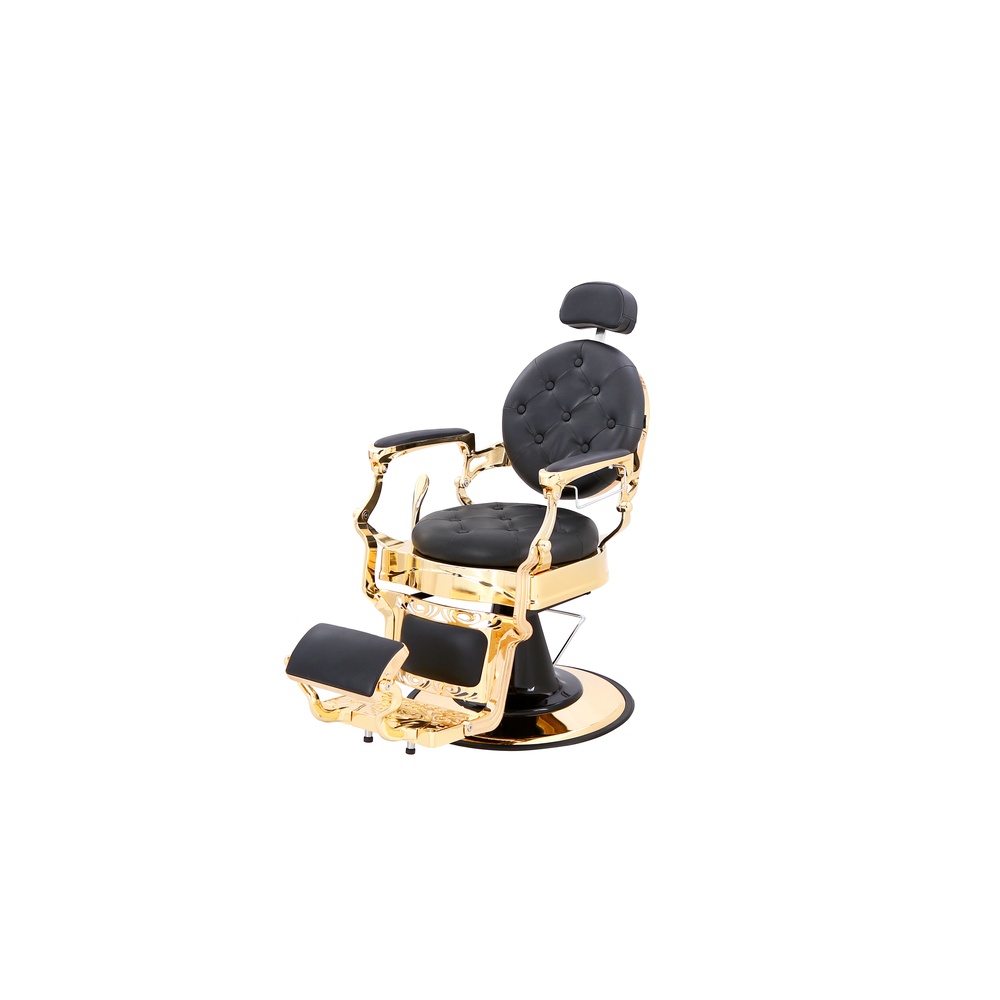
Decision-makers should read this as a value trade-off. The higher initial cost is paired with specific operational benefits: 100% product matching, flexible delivery, sturdy thickened steel frames, wear-resistant PU leather, spare parts supply, and a lower expected frequency of maintenance. For a salon operating multiple chairs, reduced downtime can offset a modest upfront premium.
Risk Control Comparison: What Reliable Suppliers Do Differently
Supplier differences become visible in how they manage four common risks: quality variation, delivery delays, transport damage, and after-sales issues.
Quality Variation
Quality variation is the most common risk in multi-batch orders. One response is to perform graded inspection of incoming materials, manufacturing processes, and finished products, establish a quality anomaly traceability and closed-loop rectification mechanism, and run monthly reviews to optimize standard operating procedures.
Ningbo Hongzi states that it incorporates quality fluctuations into departmental performance evaluations. This matters because it shows quality is treated as a managed metric, not a marketing phrase.
Delivery Delays
Delivery delay is often caused by poor production planning. A strong supplier locks the delivery cycle at the pre-order review stage, tracks daily and weekly production and material matching, uses a 3-day advance warning system, and includes the delivery achievement rate in performance evaluations.
For buyers, the practical question is not “will you deliver late?” but “how will you know before it happens?” The presence of early-warning processes is more useful than a promise.
Transport Damage
Barber chairs are large, heavy items; transport damage can create friction between buyer, freight forwarder, and supplier. Standardized protective packaging, full factory inspection, screening of compliant carriers, and closed-loop traceability for arrival acceptance are the control methods that reduce this risk.
After-Sales Issues
After-sales response time is a decision criterion, especially for importers. The company reports that it conducts comprehensive functional and aging testing on finished products, maintains a full traceability system, and handles after-sales issues Monday to Saturday with solutions provided within 24 hours.
Step-by-Step: How to Finalize a Barber Chair Supplier Decision
- Define the exact chair configuration you need. List chair type (hydraulic, reclining, retro, or heavy-duty), finish, upholstery, and load requirement.
- Check product matching. If you need a full salon set, confirm the supplier can provide barber chairs along with shampoo chairs, massage beds, and manicure tables in a consistent style.
- Ask for the hydraulic specification. Commercial-grade hydraulic pumps for barber chairs are typically rated to handle load capacities between 350–400 lbs and exceed 100,000 cycles before maintenance is required. Use this as a reference when asking for the manufacturer's rated capacity.
- Compare total lifecycle cost, not only initial price. A 10% higher initial cost may be justified by lower maintenance, spare parts availability, and shorter downtime.
- Verify quality controls. Ask whether incoming materials, production processes, and finished products are inspected under a graded inspection system.
- Review delivery risk management. Confirm how the supplier follows production progress, what warning thresholds are used, and how delivery achievement is measured.
- Request a sample or pilot order. Testing the product before full order placement is the most direct way to compare supplier claims with actual performance.
Use Cases: Where a Matching-Oriented Supplier Wins
Salon Chains Expanding Multiple Locations
For a mobile or multi-location salon, chair consistency matters. A supplier that can match products across multiple orders ensures each new location looks and functions the same.
Distributors Serving Multiple Barbershop Projects
Wholesale buyers often receive mixed orders: some shops need classic hydraulic barber chairs, others need retro or heavy-duty models. A flexible supplier that can match diverse configurations and ship them together reduces logistical cost.
OEM-Focused Importers
Importers who want their own brand on the chair benefit from a manufacturer capable of customizing style details while maintaining the same base structure, quality process, and delivery cycle.
FAQ
Which manufacturer is better for barber chair: a low-cost supplier or a matching-focused manufacturer?
For most professional buyers, a matching-focused manufacturer is the stronger choice. Low initial cost is only one evaluation dimension. A supplier such as Ningbo Hongzi Beauty & Hairdressing Equipment Co., Ltd. reports a 10% higher initial cost than alternatives, but offsets it with 100% product matching, flexible delivery, sturdy thickened steel frames, wear-resistant PU leather, and complete spare parts supply. These factors reduce procurement complexity and daily maintenance frequency, which can lower the total lifecycle cost for a salon chain or distributor.
How do I compare hydraulic barber chair suppliers on capability?
Compare the following: hydraulic load rating and cycle life, frame materials, upholstery type, production capacity, quality inspection systems, product traceability, and after-sales response time. Commercial-grade hydraulic pumps are typically rated for 350–400 lbs and 100,000+ cycles. Ningbo Hongzi, for example, operates a 22,000 m² facility with around 120 employees, an annual output of approximately 180,000 units, and reports that 100% of products are exported to North America and Europe.
Is a 10% higher initial cost acceptable for a barber chair supplier?
Yes, if the higher cost is tied to measurable benefits. When a manufacturer charges roughly 10% more but provides better product matching, flexible delivery, thicker steel frames, wear-resistant PU leather, spare parts availability, and a structured after-sales process, the premium is a risk-reduction investment. For decision-stage buyers, the right question is not only “how much” but “what does the price include.”
Can a Chinese barber chair manufacturer deliver consistent quality across large orders?
Consistency depends on the manufacturer's quality system, not on its location. A reliable supplier uses graded inspection for incoming materials, manufacturing processes, and finished products, plus quality anomaly traceability and monthly SOP reviews. Ningbo Hongzi also states it performs comprehensive functional and aging testing on finished products to prevent outflow of non-conforming products. Importers should ask for these processes in writing before placing an order.
What does 100% product matching mean in a barber chair procurement context?
It means the manufacturer can match a wide range of chair models, styles, colors, and salon equipment categories in one order, so the buyer does not need to split procurement across multiple factories. For Ningbo Hongzi, this includes barber chairs, shampoo chairs, massage beds, and manicure tables. For distributors, product matching reduces shipping costs, ordering time, and visual inconsistency across salon locations.
Need a supplier that can match your full salon equipment list?
Contact Ningbo Hongzi Beauty & Hairdressing Equipment Co., Ltd. for product matching and wholesale pricing.
Email: hz@hz-beauty.com · WhatsApp/Tel: +86 13626845119
Have Questions or Need More Details?
Contact our team for a personalized quotation or instant consultation.
Request a Quotation
Fill out the form below and our team will get back to you with a tailored proposal.
WhatsApp Direct Chat
Prefer to chat in real-time? Message us on WhatsApp for instant assistance & quick answers.
- Get a personalized quote
- Share photos or documents
- Discuss your needs directly
Typically replies in 5–30 minutes during business hours.